
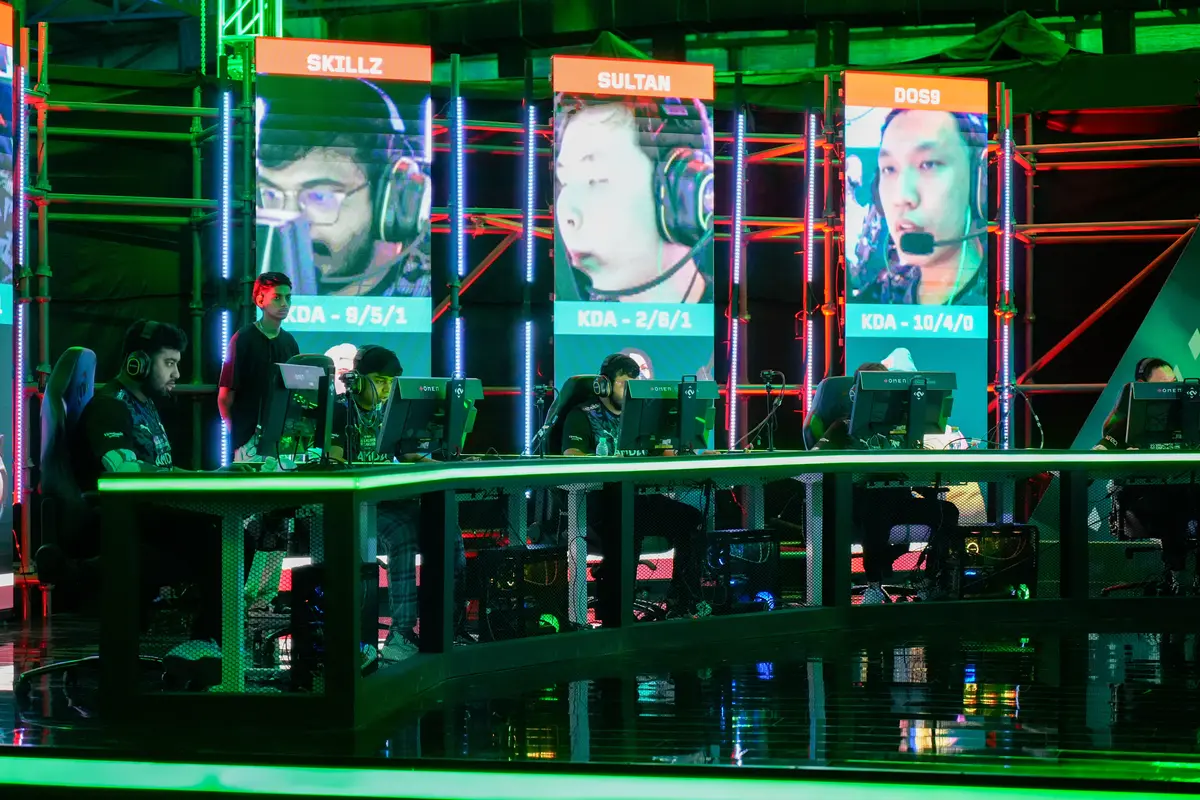
If 2025 was the year Indian esports secured legitimacy, 2026 is shaping up to be the year that legitimacy turns into lasting structure. With the Promotion and Regulation of Online Gaming Act (PROGA) moving from policy to practice, the ecosystem is entering a phase where competitive integrity, athlete development, and commercial confidence are finally aligned. The focus is no longer on proving esports’ relevance, but on building systems that allow it to scale sustainably, both at home and on the world stage.
Indian Esports in 2026: From Asian Games To Home Soil
The most visible milestone on the horizon is the Asian Games 2026 in Japan, where esports will once again feature as a medal event. For Indian athletes, this represents more than international exposure.
It places competitive gaming within a fully recognised multi-sport environment, reinforcing esports as a legitimate pursuit alongside traditional disciplines. Alongside the Asian Games, global platforms such as the Esports World Cup and the Esports Nations Cup are expected to see stronger Indian representation, reflecting a steady rise in competitive depth and preparedness.
This global momentum is closely tied to what is happening domestically. Esports’ inclusion as a demonstration event at the Khelo India Youth Games last year marked a turning point, signalling government intent to integrate competitive gaming into national sporting frameworks. With PROGA now in effect, 2026 is expected to bring deeper adoption at the state level, more grassroots tournaments, and clearer athlete pathways through schools, colleges, and youth leagues.
Akshat Rathee, Co-founder and Managing Director of NODWIN Gaming, believes the next phase will be defined by continuity rather than spectacle. “For Indian esports to truly level up in 2026, the focus has to shift from being largely event-led to ecosystem-led,” he says. “Regional and state-level competitions that consistently feed into national leagues will be crucial to widening the talent pipeline and ensuring competitive players emerge from every part of the country. India also needs to move beyond being seen as a one or two title market. While BGMI and Free Fire remain important, long-term growth will depend on deliberately building ecosystems around a variety of titles. Equally important is developing more India-relevant and Indian-published titles that are esports-ready from day one.”
Rathee also highlights the evolution of commercial models, noting that revenue sharing across publishers, organisers, teams, and creators, covering media rights, in-game activations, ticketing, and merchandise, will become increasingly central. From a business standpoint, he adds that NODWIN Gaming is aiming for 15 to 40 percent growth through a combination of organic scale and targeted inorganic opportunities.
Esports Will Return To Asian Games As A Medal Event
Talent development sits at the heart of this next chapter. While India already boasts scale in player base and viewership, 2026 will test how effectively the ecosystem can identify, nurture, and retain competitive talent over the long term. Animesh Agarwal, Co-founder and CEO of S8UL Esports, sees this as the ecosystem’s defining challenge and opportunity. “India already has the passion and numbers,” he shares. “What will differentiate us globally is how early we spot talent and how well we support players once they enter the system.”
He adds that esports’ return to the Asian Games as a medal sport will be a landmark moment, shifting the conversation toward infrastructure readiness, training depth, and long-term athlete mentorship.
As competitive gaming professionalises, brands are also recalibrating their approach. With regulatory clarity in place, esports is increasingly being viewed as a core youth engagement platform rather than a short-term experiment.
FMCG, automotive, BFSI, and ed-tech brands are expected to deepen their involvement through creator collaboratives, IP-led tournaments, and campus gaming programmes. The emphasis is shifting from momentary visibility to sustained participation and trust within gaming communities.
This evolution is closely tied to how Indian gamers themselves are changing. Hardware adoption is accelerating rapidly, particularly beyond metro cities. Affordable gaming PCs, AI-powered peripherals, and cloud gaming services are lowering entry barriers, while Gen Z consumers are spending more intentionally on performance setups.
Vishal Parekh, COO of CyberPowerPC India, notes that purchasing behaviour has matured significantly. “Gamers today are far more deliberate,” he notes. “A PC is no longer seen as a single purchase, but as a performance ecosystem that evolves over time.” He adds that competitive multiplayer and mid-core PC titles will continue to grow, alongside social and creator-driven formats that turn gaming into a shared, community-led experience.
Monetisation patterns are also evolving in parallel. Sagar Nair, Head of Incubation at LVL Zero, expects Indian gamers to engage more deeply with long-term value mechanics. “Spending is shifting toward systems that reward commitment, whether that is battle passes, cosmetic progression, or subscription-based models,” he explains.
He also highlights the emergence of an older, more stable paying gamer segment, players who grew up gaming and now have greater spending power. “Creators and communities will increasingly drive discovery, retention, and monetisation,” Sagar adds, positioning 2026 as a year of execution as LVL Zero prepares to launch its first cohort supporting high-potential teams through development and launch.
Taken together, these shifts suggest that 2026 will not be defined by a single breakout moment, but by alignment. Regulation, global recognition, grassroots pathways, brand confidence, and consumer maturity are finally moving in the same direction. Indian esports is no longer seeking validation. It is laying the groundwork for long-term sustainability.
From Asian Games to home soil: How 2026 promises to elevate Indian esports Inside Sport India.
Hence then, the article about from asian games to home soil how 2026 promises to elevate indian esports was published today ( ) and is available on Inside sport ( Middle East ) The editorial team at PressBee has edited and verified it, and it may have been modified, fully republished, or quoted. You can read and follow the updates of this news or article from its original source.
Read More Details
Finally We wish PressBee provided you with enough information of ( From Asian Games to home soil: How 2026 promises to elevate Indian esports )


Also on site :
- Team Talk: A chaotic Saturday in Baku City
- Wild scene as USC-Oregon brawl nearly erupts after brutal Dante Moore hit
- 'Scary bully' Sir Alex Ferguson admitted he'd be 'in jail' if managing Man Utd now