
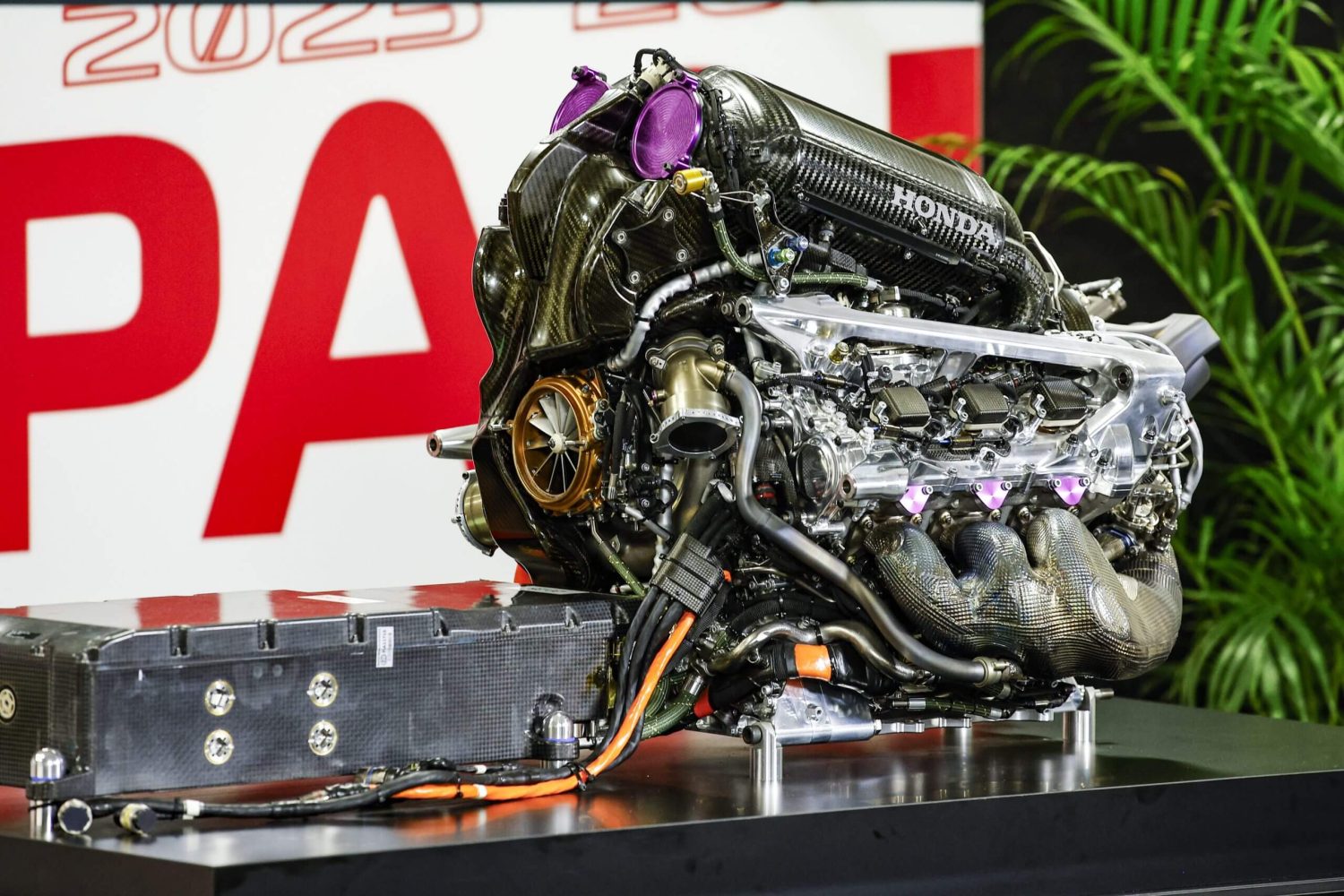
As Formula 1 gears up for its highly-anticipated 2026 season, the grid faces one of the most significant regulation resets in decades, one in which the primary weapon will be found under the engine cover, according to the FIA.
New chassis rules, active aerodynamics, and fully sustainable fuels mean every team is essentially starting from scratch. In a sport where tiny details can make or break a race, the question on everyone’s mind is: what will separate the frontrunners from the pack early on?
History offers both caution and inspiration. When the hybrid era began in 2014, Mercedes’ superior power unit immediately established a performance gulf, locking in years of dominance and prompting fans and rival teams to call for closer competition.
With the 2026 reset, the possibility of a similar scenario exists, but the FIA has learned from the past. A series of measures, including the ADUO system for power unit upgrades, aims to prevent prolonged runaway supremacy.
The stakes are high, and teams are already running simulations to understand how far their new packages can go. Pirelli has indicated that early predictions of downforce and load varied widely between teams, underscoring that the first races of 2026 could see significant differences in pace.
Yet the governing body believes convergence will come with time, ensuring not only fair competition but also an entertaining championship for fans.
ICE as the Early Differentiator
FIA single-seater director Nikolas Tombazis believes the Internal Combustion Engine (ICE) will create the first gaps between the front-runners and the chasing pack.
“I would expect the engine to be the main factor initially, the ICE. We obviously have newcomers and new ICE regulations, so we expect some initial differentiation,” said the Greek engineer, quoted by Motorsport.com.
With manufacturers like Audi and Red Bull Ford Powertrains joining established giants Ferrari, Mercedes, and Honda, the learning curve is steep.
Unlike the 2014 hybrid dawn – where Mercedes’ dominance was "locked in" by a restrictive token system – the FIA has designed the 2026 rules with a built-in safety net known as the ADUO (Additional Development & Upgrade Opportunities) system.
This mechanism allows the FIA to monitor power output every six races. If a manufacturer is more than 2% off the pace, they are granted extra dyno hours and upgrade opportunities to close the gap.
“But we also believe that we've also put in place procedures to, let's say, enable people to gradually catch up. So we believe that it's a temporary matter in terms of performance differentiations,” Tombazis explained.
Aerodynamic Convergence and Fan Spectacle
While the engines may provide the initial spark, the "shape-shifting" cars – featuring moveable front and rear wings – will offer a secondary layer of complexity.
“Then we have completely new aerodynamic regulations as well. Naturally, there will be some solutions that are better and some that are worse. There will be some initial convergence, I guess, over the first six months or one year,” Tombazis added.
©Formula1
The FIA anticipates that while the field might spread out in Melbourne, the long-term goal is a grid tighter than any seen before. Tombazis is realistic about the immediate future, noting that the 2025 season’s parity might be a hard act to follow right away.
“For 2026, I would not expect to have the grid quite as close as what we had last year. But I would expect that the converged grid [later on] is closer than what it was in 2025,” Tombazis said.
When asked about the varied downforce levels predicted by early simulations, he remained cautious:
“Reasonably, but we cannot be sure because we don't have detailed data from the teams, so we don't know how much downforce they have now or how much horsepower they have.
“Initially, I think there may be some variation, but we are pretty sure that the converged performance should lead to a smaller [more compact] grid.”
Read also:
Symonds slams F1’s 2026 power unit: ‘We ended up with a camel’
Crucially, Tombazis believes that a gap between the fastest and slowest cars doesn't necessarily ruin the show.
“I think what determines the closeness of the grid is not necessarily the gap between the first and the last,” he insisted. “If one or two teams are in a bit of trouble initially, I don't think that determines how exciting a championship is.”
As the clock ticks toward Melbourne, the message is clear: the engines will roar with new intensity, and while the initial results may be lopsided, the hunt for convergence will be faster than ever.
Keep up to date with all the F1 news via X and Facebook
FIA expects F1 engines to drive early performance gaps in 2026 F1i.com.
Hence then, the article about fia expects f1 engines to drive early performance gaps in 2026 was published today ( ) and is available on F1 News ( Middle East ) The editorial team at PressBee has edited and verified it, and it may have been modified, fully republished, or quoted. You can read and follow the updates of this news or article from its original source.
Read More Details
Finally We wish PressBee provided you with enough information of ( FIA expects F1 engines to drive early performance gaps in 2026 )


Also on site :
- Meet the 'Balkan Diletta Leotta' who ex-Real Madrid ace 'risked prison' to visit
- Before the Beatification, Pilgrims Trace Fulton Sheen’s Roots in Central Illinois
- BREAKING 'Insulting' changes to BBC Sport as 'services axed and staff at risk'