
As Formula 1 closes the chapter on its 2022–2025 ground-effect era, the FIA has taken a rare moment of self-reflection to assess the challenging technical period.
While the regulation set succeeded in reshaping the cars and initially improving racing, the governing body now acknowledges that some crucial details were underestimated – none more significant than how low the cars would ultimately need to run.
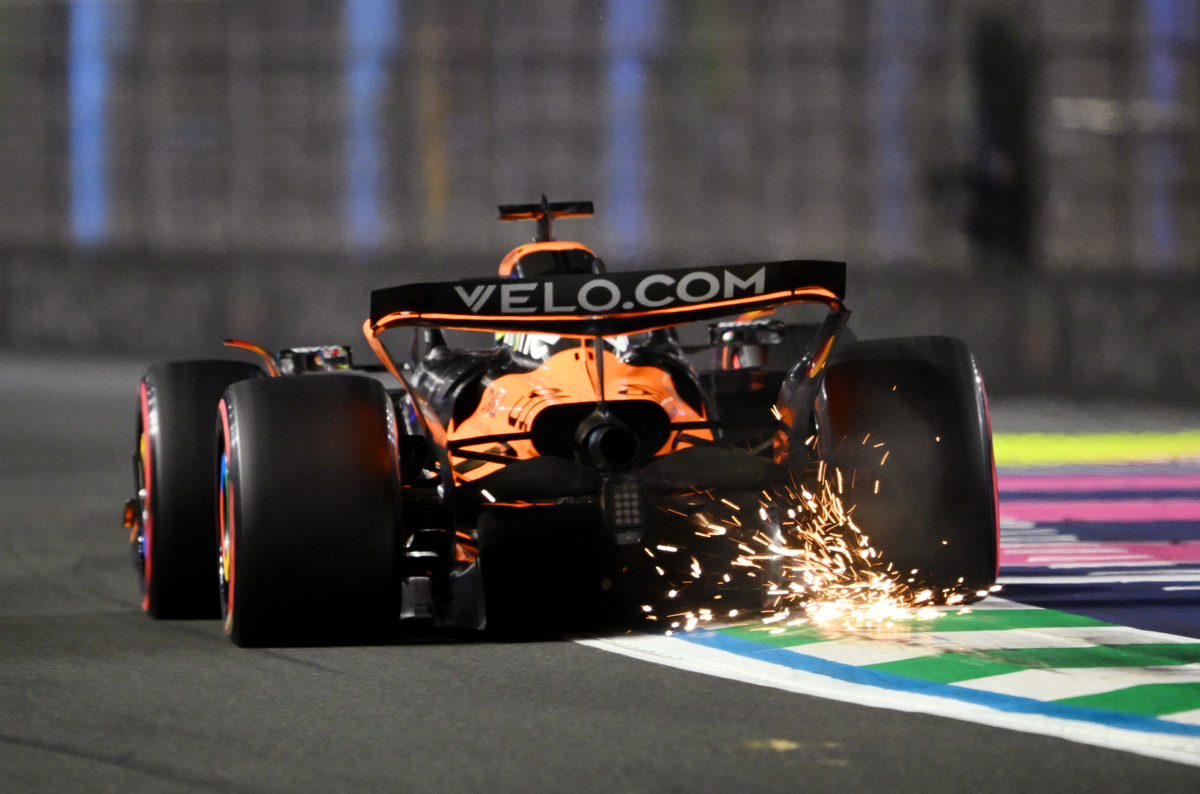
While dirty air became a growing concern during the last two seasons, it was the machines’ ride height that quietly evolved into the defining performance lever of the era. Teams discovered that extracting maximum downforce meant running cars extremely low and stiff, pushing comfort, reliability, and legality to the edge.
That discovery arrived too late for easy fixes, and it’s a reality FIA single-seater director Nikolas Tombazis openly admits.
“The fact that the optimum [ride height] of the cars moved so much lower was a miss in the 2022 regulations," Tombazis told reporter last month, quoted by Motorsport.com.
A Late Realisation With Lasting Consequences
The FIA’s oversight wasn’t made in isolation. According to Tombazis, the issue slipped through the collective net during the design phase, only becoming obvious once the cars were close to racing.
"It's something that we missed – and not only us but also the teams. In all discussions, nobody raised that issue. It was something that became obvious very, very close to the start of the championship, when it was too late to change the regulations.
“The initial porpoising, which hasn't totally disappeared but has obviously improved massively, was also something that had not been anticipated. I wish we had done better there."
Porpoising dominated headlines in 2022, but even after technical directives and team solutions eased the most violent oscillations, discomfort remained a theme. Drivers continued to feel the physical toll, with cars pounding the asphalt at high speed in pursuit of performance.
Why Suspension Freedom Wasn’t the Fix
Some critics argued that tighter suspension regulations might have prevented teams from chasing such extreme ride heights. The FIA, however, is unconvinced that restricting suspension design would have addressed the core problem.
“We don't believe that suspension changes would have had a first-order effect," Tombazis said.
"It would perhaps have given them a [different] set of options, but we don't think the simplification of the suspension rules would have had a first-order effect.”
FIA Head of Single-Seater Technical Matters, Nikolas Tombazis.
Instead, teams leaned even harder into the margins, bringing plank and skid wear under intense scrutiny. High-profile cases – from the 2023 United States Grand Prix to McLaren’s 2025 Las Vegas GP weekend – highlighted how fine the line had become between performance and disqualification.
Inspecting planks proved both complex and time-consuming, made harder by the variety of floor and skid designs across the grid. Calls for further standardisation followed, but Tombazis warned that such solutions come with trade-offs.
“Please don't take this single phrase without my complete thought, but all of these problems would go away the more we go towards a standard car,” he conceded.
“You can easily have a Formula 2 car with a bit more performance, and then you don't have porpoising, you don't have any loopholes, and you don't have any plank issues.
Read also:
‘We tried’: Why the FIA stopped short of fixing F1’s dirty air problem“You can solve all of these things with more prescription. But clearly, we want Formula 1 to be a technological battle as well. We don't want it to be a single car with different stickers on it. And therefore we do leave some leeway to the designers.
“Specifically for the plank, there was an additional factor as well. Different teams had different ways to deal with the reliability concerns of cars banging on the road all the time. To say, this is your design and it’s rock solid, then some teams would have said, 'well, but you can't do that because if our engine takes a hit there, it's going to break'.
You have the ERS systems and so on, so you have to consider various other issues before you introduce a standard system of some sort.”
Why 2026 Should Be Different – But Not Guaranteed
Looking ahead, the FIA is confident – but cautious – that the next regulation cycle will not repeat the same problems. The 2026 cars retain ground-effect principles but with far simpler floors, which should push teams toward higher ride heights and reduce sensitivity.
“We believe it is very unlikely to have similar characteristics because of a much flatter floor," said Tombazis.
©FIA
How much the downforce increases as you go lower is not as pronounced with this car as it was in last year's car. We believe that will reduce the chance of porpoising.”
Still, recent history has taught the FIA not to declare victory too early.
“When the cars run for the very first time and have some issue, I wouldn't exclude it,” Tombazis said.
“But I would say that the rules are inherently less in that direction. So given the teams did a pretty good job of solving the issue with the previous generation of cars, it should be a much easier problem next time.”
As Formula 1 prepares for another major reset, the FIA’s candid assessment serves as both a lesson learned and a reminder: even the most ambitious regulations can carry unintended consequences – and sometimes, they only reveal themselves once the cars hit the track.
Keep up to date with all the F1 news via X and Facebook
FIA admits to key oversight during F1 ground-effect era F1i.com.
Hence then, the article about fia admits to key oversight during f1 ground effect era was published today ( ) and is available on F1 News ( Middle East ) The editorial team at PressBee has edited and verified it, and it may have been modified, fully republished, or quoted. You can read and follow the updates of this news or article from its original source.
Read More Details
Finally We wish PressBee provided you with enough information of ( FIA admits to key oversight during F1 ground-effect era )


Also on site :
- Meet the 'Balkan Diletta Leotta' who ex-Real Madrid ace 'risked prison' to visit
- Before the Beatification, Pilgrims Trace Fulton Sheen’s Roots in Central Illinois
- 2026 Asian Games: Day Four Finals Live Recap