
The story of horror in 2025 is a story of triumph. In 2025, horror made up 17% of North American ticket sales, up from 4% a decade ago. Similarly, the number of horror films going into production increased 21% between 2023 and 2024. The cause-and-effect there is obvious: More horror movies in theaters means more people are going to see horror movies, duh. At the same time, however, that increase in output was in response to an organic groundswell of interest in the genre. Either way, the bean-counters are listening, leading to big box office and the kind of cultural saturation that once seemed unlikely, if not impossible.
Given the data-driven nature of contemporary Hollywood, it should not be a surprise that multiple late-franchise horror sequels hit theaters in 2025. And indeed, they were safe bets, as two of them—one celebrated, the other not so much—made more than $100 million at the domestic box office. One is “Final Destination: Bloodlines,” a demented Rube Goldberg mousetrap of a film that was warmly received by both audiences and critics. The other is “The Conjuring: Last Rites,” which I was surprised to learn made nearly half a billion dollars worldwide. (Don’t count out Catholicism as a pop-cultural force just yet.)
The real story, however, is in two original horror titles, both of which easily passed that $100 million domestic milestone. Ryan Coogler’s period vampire movie “Sinners” was an artistic and box-office juggernaut in 2025, steadily building support through bravura filmmaking like the barnburner (pun intended) production number that’s arguably the scene of the year. Zach Cregger’s buzzy “Barbarian” follow-up “Weapons,” meanwhile, utilizes an unconventional chapter-based structure whose shifting points of view skillfully reveal (and withhold) information when the audience needs it most.
It should be noted that both of these films were released by Warner Bros., whose future is now in question after Netflix announced its plan to acquire the century-old studio for $83 billion. Will this kind of storytelling be allowed to exist in the mainstream for much longer, or will it be crushed under a mountain of data as tech companies in the movie business steadily grind art into content? The existence of Guillermo del Toro’s $120 million “Frankenstein” adaptation (which I don’t really consider a horror movie) would seem to imply otherwise. But trusting Netflix to do the right thing when it comes to supporting original films—let alone marketing and distributing them properly—is far from a sure thing.
What’s important now is to look forward to new modes of production and distribution, which leads us to my actual favorite horror film of 2025. Following its premiere at this year’s SXSW, “It Ends” seemed destined to be a simple footnote, an undistributed title briefly mentioned at the end of wrap-up pieces like this one. Then it debuted as a selection on Letterboxd’s new VOD rental platform Video Store. Such an unconventional release is appropriate for 27-year-old Alexander Ullom’s feature debut, which blends existential terror with a low-key hangout movie. Its production is a classic underdog tale, adding to the myth of this startling, resourceful debut in the tradition of Sam Raimi and “The Evil Dead.” And the unpredictable saga of this unusual road movie continued with the late 2025 announcement that Neon has picked up Ullom’s film for a planned theatrical release in 2026.
A similarly clever backstory powered another notable indie-horror film of 2025, as “Good Boy” became a hit for IFC/Shudder on the strength of a good gimmick and an excellent PR campaign that played on the popular aversion to seeing dogs suffer and/or die in movies. In this case, a spoiler was necessary, as marketing for the film reassured viewers that its charismatic canine star Indy does survive the movie, was not actually afraid at any point during filming, and in fact had no idea he was starring in a movie. It worked on me, as did the conceit itself, ingeniously executed by director Ben Leonberg.
Looking forward into 2026, the cyclical nature of horror as a conduit for society’s fears and anxieties—and maybe even its hopes—was present in a trio of films that presented witchcraft as both a protective shelter for outcasts and a site of spiritual resistance. Prolific Australian director Alice Maio Mackay’s new film “The Serpent’s Skin” is her best yet, a “Buffy the Vampire Slayer”-influenced tale about two young women in love and the cursed tattoo that keeps getting in the way of their romance. That film co-stars Avalon Fast, director of “CAMP,” an extraordinary, delicate film that finds healing in both the light and the dark sides of magical girlhood.
“Mother of Flies,” from indie filmmaking family Toby Poser, John Adams, and their daughters Zelda and Lulu, takes a more mature approach, going elbow-deep into dark magic and intense emotions for a story about a teenage girl with cancer who, accompanied by her skeptical father, visits a necromancer in hopes of curing her illness. This film comes from a profoundly personal place from its makers, who are committed to the type of true DIY filmmaking that corporate greed cannot touch simply because it’s so far outside of the system. We could all learn a lot from them.
“28 Years Later”
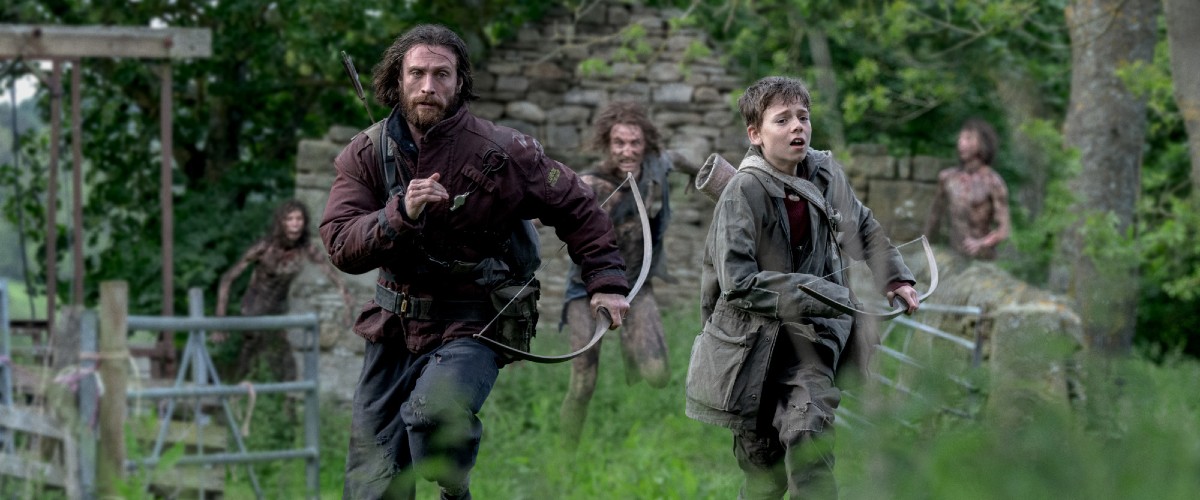
The best late-franchise horror film in a year with multiple solid examples, enough time has passed since the original “28 Days Later” that Danny Boyle’s digital showboating—the freeze frames, the camera buzzing around the characters like a persistent insect—feels fresh and exciting again. Screenwriter Alex Garland’s efforts to build out the characters’ post-apocalyptic world are also reminiscent of the best of George Romero, resulting in a film so tense and gripping that I didn’t mind the obvious setup for a sequel.
“40 Acres”
Danielle Deadwyler’s grim, disciplined performance is the highlight of this slow-burn horror-drama, which draws on the specific historical traumas of Black and Indigenous people for a prickly, political take on post-apocalyptic horror. The film follows a family of homesteaders under siege at the end of the world, years after a fungal pandemic has wiped out most of the planet’s animal life. Deadwyler’s character’s permanently knotted muscles reflect the burden of self-reliance, an extreme example of the ways society abandons women like her every day.
“Best Wishes to All”
Yuta Shimotsu, whose first two features have both gone to Shudder, is a key figure in a new wave of young, J-horror inspired filmmakers. Bizarre twists are Shimotsu’s thing, and while it shares a deadpan sensibility with the filmmaker’s as-yet-unreleased “New Group,” “Best Wishes to All” is darker and more grotesque, speaking to the cowardice and hardening of one’s heart that comes with both Japanese conformity and the erosion of compassion and empathy in 21st-century America.
“Dangerous Animals”
Sean Byrne films only come out every so often, which makes every new one an event. And, perhaps because of their extended development time, Byrne’s films tend to be better constructed than their contemporaries. This is true of his latest, the shark-attack/serial-killer hybrid “Dangerous Animals;” the “man is the…” conceit isn’t new, but Byrne’s thought it through well enough to deliver some genuine surprises, including a great performance from Jai Courtney as the drunken embodiment of toxic masculinity.
“Final Destination: Bloodlines”
The fact that a movie where someone gets trampled by wild horses was so easily usurped in the gore department is less of a dig at “The Monkey” and more of a tip of the barf bag to “Final Destination: Bloodlines.” So many people get smashed into goo in this movie, which adds pennies, MRI machines, garden hoses, rakes, garbage trucks, nose rings, wind chimes, and tree cutters to the series’ already impressive list of objects you’ll never look at the same way again.
“Good Boy”
I really don’t mean it as an insult to the humans who starred in genre movies this year when I say that one of 2025’s best horror performances comes from a dog. The way Ben Leonberg directs his dog Indy— a family pet with no prior acting experience—in this fresh take on a common haunted-house trope took both creativity and incredible patience. Intermittently filmed over several years, the fact that it hangs together at all, let alone works as a compelling 73-minute feature narrative, is extraordinary.
“It Ends”
“It Ends” is Sartre for Gen-Z climate doomers, a story about a group of young people driving in an endless straight line to nowhere. Its raw existential despair not only makes clever use of the film’s low-budget limitations—all the filmmakers needed was a car, a road, and some actors—but also captures something essential about coming of age in 2025. There’s no point to this journey, and no end to it, either; still, there’s nothing left to do but keep going, a feeling akin to, say, getting up and going to work in the morning while the world is burning around you.
“Sinners”
With “Sinners,” director Ryan Coogler takes his experience with big-budget franchise filmmaking and applies it to a passion project, making for a blockbuster that even film snobs can get behind. The film takes its time getting to its climactic bloodbath, creating complicated characters that the audience actually cares about by the time its vampire plot really begins to unfold. This is a cocky, hot-blooded film, full of sex, anger, and transcendent creativity.
“The Ugly Stepsister”
High femme meets hard arthouse in this pan-Scandinavian debut feature from director Emilie Blichfeldt. “The Ugly Stepsister” is aesthetically sophisticated and lushly executed, pairing lavish costumes and old-world architecture with the exposed nerve of its torture sequences. What else could you call scenes where a teenage girl gets her nose broken with a chisel and her eyelids pierced with a needle? Beauty, that’s what, as Blichfeldt’s film gains an additional layer of horror from the fact that its “cosmetic treatments” are based in historical fact.
“Weapons”
“Weapons” works best as an imperfect metaphor for multiple contemporary crises—school shootings, for one, as well as parental addiction and child abuse—that combine to form a subconscious, dreamlike lament about the many ways America fails its children. The peril pairs nicely with the film’s fairytale aspects, which combine moments of dark humor (see: that viral tray of hot dogs) with scenes of intense, unstoppable violence for a truly destabilizing movie experience.
Hence then, the article about the 10 best horror films of 2025 was published today ( ) and is available on Roger Ebert ( Middle East ) The editorial team at PressBee has edited and verified it, and it may have been modified, fully republished, or quoted. You can read and follow the updates of this news or article from its original source.
Read More Details
Finally We wish PressBee provided you with enough information of ( The 10 Best Horror Films of 2025 )


Also on site :
- A Fat, Nude Woman Became a 1970s Merchandise Sensation. Who Was “Bridget in the Buff”?
- Macy’s Has an Elegant 8-Piece Reversible Comforter Set That Exudes French Countryside Charm for Under $40
- Transform Decks, Patios, and Yards Ahead of Spooky Season With Walmart’s ‘Super Fun’ $25 Halloween Lights