
Mowaffak al-Khouja | Wasim al-Adawi | Christina al-Shammas| Lubaba al-Tawil
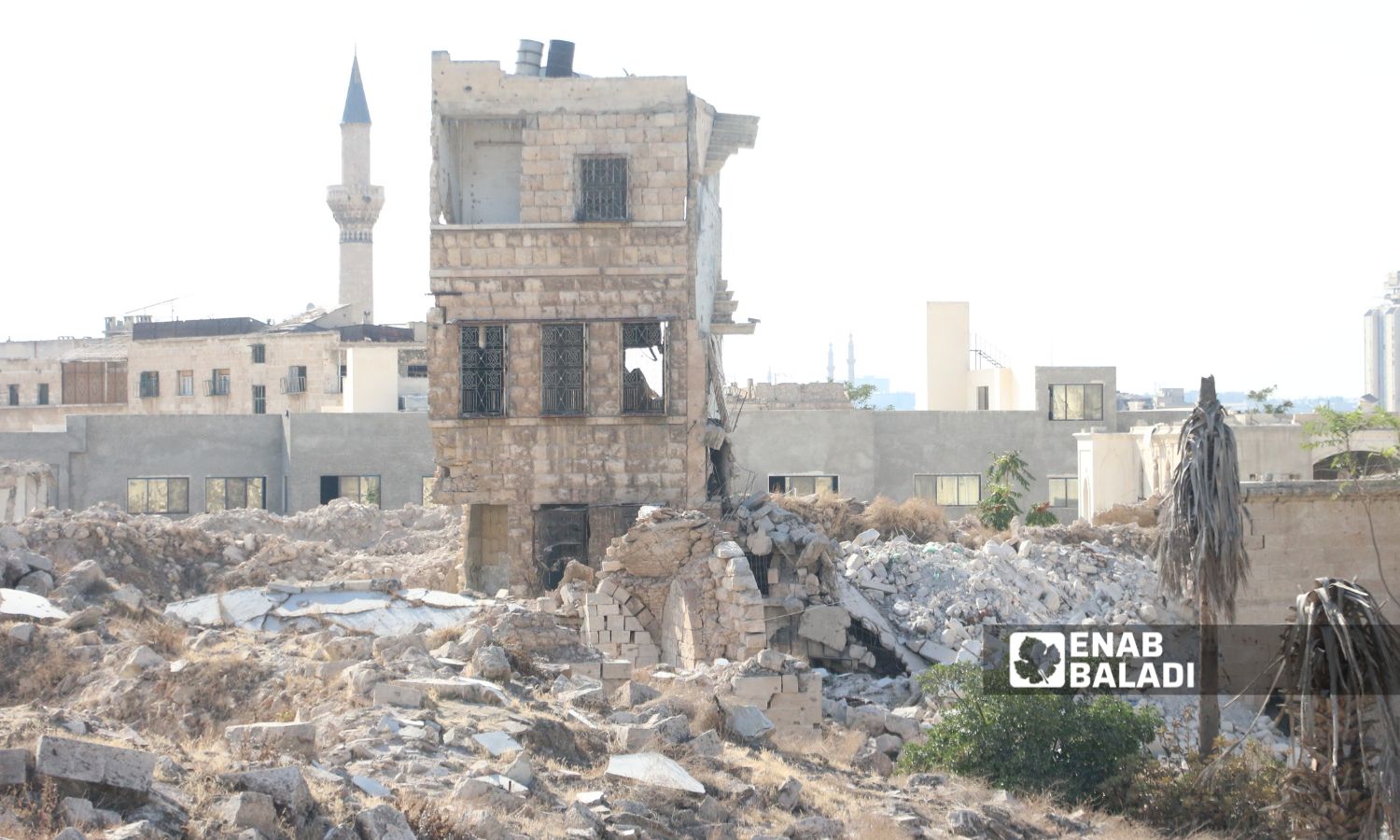
Syrians continue to wait for the reconstruction of their towns and cities, devastated by 14 years of war. Yet the reality appears far more complex, hindered by economic, political, and security challenges.
Although Syria has recently emerged from the war and seeks stability, still disrupted by military operations on the coast and the south, the economic situation remains dire at both the individual and state levels. Citizens live under the bare minimum of survival, while the state treasury stands empty, reliant on domestic donations or international aid, without recourse to borrowing.
Amid tough and seemingly unattainable international conditions, the Syrian government has sought to replace grants with local fundraising initiatives. However, these efforts cover only a fraction of the immense costs of reconstruction.
At the same time, Syria is witnessing a cautious opening toward investment projects from regional and Arab states, suggesting a possible economic improvement in the coming years and, with it, progress in rebuilding the country’s devastated urban centers.
This Enab Baladi special report examines the challenges and obstacles facing Syria’s reconstruction, explores potential solutions with researchers and economic experts, and reviews both local and international efforts to restore life to destroyed cities.
Return of the Displaced… A Deferred HopeJahida Qartouma (65), displaced from Jobar in rural Damascus after relentless shelling flattened the neighborhood and forced residents to flee, has since relied on aid from civil society organizations. She moves between rented homes under harsh living conditions.
She recalls, with sorrow, how a neighbor showed her a video recording of her destroyed district after the regime’s fall, asking if she recognized it. “How could I?” she replied in disbelief. “The former regime left nothing standing in Syria.” Her shock grew when she realized her own house was in the footage.
Overcome with tears, Jahida said she could not even recognize the house that had sheltered her family for years, describing the moment as a flood of memories of a once-secure life, before regime airstrikes reduced it to rubble.
She admits to feeling powerless and hopeless, no longer seeing any possibility of returning to Jobar, now “wiped off the map” by systematic bombardment, left only as a memory heavy with loss and longing.
Raed Tu’meh (45) shares Jahida’s struggle. He recounts watching an air raid destroy his home in Hazza, eastern Ghouta, before fleeing with his family to Idlib in 2018, leaving behind a heavily damaged house.
He told Enab Baladi how helpless he felt as he rushed only to save his family. That sense of defeat, he said, has haunted him through years of displacement.
After the regime’s fall, Raed decided to return to his hometown. But the joy of coming home was short-lived; his house was uninhabitable, requiring an estimated $5,000 for repairs, far beyond his means.
He said no government body has contacted him to provide reconstruction support, and the only presence he noticed was the Syrian Arab Red Crescent, which offered limited aid such as blankets and mattresses.
Similarly, Ahmad al-Tayyar (52), displaced from Harasta in rural Damascus eight years ago, returned after the regime’s collapse to find the building he once lived in reduced to rubble.
Unable to afford reconstruction and faced with skyrocketing rental prices in rural Damascus compared to his current living costs in rural Aleppo, Ahmad deemed returning nearly impossible.
He added that the absence of basic services in Harasta, electricity, water, and infrastructure, deepens his reluctance. His situation mirrors that of dozens of displaced Syrians who view returning home as “a distant dream.”
Ahmad described himself and others like him as “forgotten” by the government, stressing that the first true investment the Syrian authorities should pursue is bringing displaced families back home and creating conditions for them to resume normal lives.
Syrian Civil Defense removing rubble in Eastern Ghouta – April 16, 2025 (Syrian Civil Defense/Telegram)
High Costs, Long Road Ahead
Economic and Political BarriersAccurate figures on the cost of Syria’s reconstruction remain elusive, given the vast destruction from 2011 until the end of military operations on December 8, 2024. However, estimates from the World Bank and the Carnegie Middle East Center place the bill between $250 and $400 billion, while some projections exceed $800 billion.
According to the World Bank’s 2021 report, Syria’s reconstruction could cost around $400 billion, potentially rising further if damages increase or political transition falters. This estimate includes restoring basic infrastructure, roads, health, electricity, and education, alongside rebuilding the private sector and encouraging investment.
The UN, in 2023, offered a lower estimate of $180 billion, covering housing reconstruction, city rehabilitation, and critical facility repair. Yet a 2019 Carnegie study stressed that Syria’s government cannot possibly shoulder such costs, which far outstrip the national budget.
The crisis is compounded by deep poverty: over 16 million Syrians inside the country need humanitarian aid, and 90% live below the poverty line, according to UN figures.
If pursued at a traditional pace, reconstruction may stretch 15 to 20 years, the World Bank noted in a July 2025 report, while the Syrian economy continues to suffer from regional instability.
Signs of Limited Improvement
The World Bank forecast a modest 1% GDP growth in 2025, following a 1.5% contraction in 2024, constrained by ongoing insecurity, liquidity shortages, and suspended foreign aid.
While easing sanctions could create limited growth opportunities, the freeze on external assets and restrictions on international banking still block energy supplies, humanitarian support, and trade and investment flows.
A January 2025 report from the UN Economic and Social Commission for Western Asia (ESCWA) projected that Syria’s GDP could grow by 13% annually between 2024 and 2030. Even then, total output would only reach 80% of pre-war levels by the decade’s end, while per capita GDP would remain at half its 2010 level.
Experts say restoring full pre-war GDP would require six additional years of steady 5% growth, pushing recovery to 2036.
Syria currently ranks 158 out of 160 countries in ESCWA’s 2024 Development Challenges Index, weighed down by entrenched governance failures, environmental degradation, and widespread poverty.
Political and Legal Barriers
Economic researcher Mohammad al-Salloum told Enab Baladi that Gulf, Turkish, and European investments, combined with major sanctions relief, could shorten the reconstruction timeline to less than 15 years.
He identified several decisive factors: the scale of destruction, institutional capacity, financing availability, and managerial efficiency.
Yet challenges remain. Law No. 10 of 2018, granting the state sweeping powers to rezone property, has not been formally repealed, raising investor and citizen concerns over property rights.
While the EU has lifted significant sanctions, donor conditions still loom, particularly regarding transparency and anti-corruption measures. UN and IMF reports underline corruption and weak institutions as the greatest threats to reconstruction, eroding trust in the public sector and obstructing reform.
To address these gaps, the Syrian government has announced plans to restructure oversight and judicial institutions and introduce safeguards to ensure integrity in reconstruction contracts, according to Salloum.
The Carnegie Middle East Center outlines three pillars for sustainable national recovery:
Inclusive political transition, enabling broad social participation in governance.
Checks on power-holders, reinforcing democratic transition.
Improved socio-economic conditions, especially for vulnerable populations facing hardship.
Carnegie warns that without these conditions, Syria’s recovery will remain fragile, risking further instability amid the exclusion of diverse political and social groups.
Since the fall of the former regime, the international community, including the EU, US, and Gulf states, has agreed on several conditions for effective reconstruction:
Syrian-led planning and execution of projects.
Inclusivity across religious, ethnic, and gender lines, alongside civil society participation.
Transparency, accountability, and incorporation of reform, human rights, and justice.
Sanctions relief tied to reconstruction financing, while maintaining measures targeting security and grave crimes.
Positive Indicators
Despite obstacles, Salloum highlights several encouraging developments:
Significant easing of EU sanctions.
Actual Gulf, Turkish, and Jordanian investments are underway.
Political and economic engagement with France and Germany.
Government programs aimed at transparency and anti-corruption.
“Reconstruction in Syria is not merely a building project, but an effort to reshape the social contract and rebuild trust between the state and society. If the government succeeds in curbing corruption and activating international partnerships, the dream of reconstruction could shift from a decades-long process to a historic achievement within a single decade.”
Mohammad al-Salloum Economic Researcher
Technical Services Directorate begins work to expand and rehabilitate the road linking Harasta and Douma – May 17, 2025 (Rural Damascus/Telegram)
Local Initiatives Driving ReconstructionSyria’s current economic policy rejects foreign borrowing, instead relying on domestic fundraising campaigns.
From Homs to Daraa, Deir Ezzor, Damascus, and its countryside, local donation drives have multiplied under various banners, seeking to revive essential services destroyed by years of war.
Within weeks, announced contributions exceeded $70 million. While substantial in the context of local resources, the figures highlight major questions about the true scale of needs and how such funds are deployed.
“Homs Wednesday”
On August 13, Homs (central Syria) hosted the “Homs Wednesday” conference, jointly organized by the governorate, the Ministry of Culture, and the Molham Volunteering Team.
The event presented fundable development projects and successfully raised $13 million, according to Molham’s announcement on Facebook.
Some projects were earmarked for specific areas, such as the rehabilitation of Palmyra Hospital in Palmyra (eastern Homs countryside, central Syria), reflecting donor preferences.
“Abshiri Houran”
Launched in Daraa (southern Syria) on August 25, the “Abshiri Houran” campaign aimed to collect $32.7 million for education, health, and water projects.
On its very first day, donations surpassed expectations, reaching $37 million, according to the Syrian Arab News Agency (SANA).
Less than two weeks later, the campaign closed with $44 million raised, over $11 million above the target.
Deputy head of the executive office in Daraa, Muhannad al-Juhmani, presented a financial report detailing how funds would be allocated to priority projects. Governor Anwar al-Zoubi confirmed that implementation began immediately after the campaign ended.
At the same time, he admitted that full reconstruction of Daraa requires nearly $60 billion, underscoring the vast gap between resources and needs.
Syrian Development Fund
On September 4, the Syrian Development Fund was launched in the presence of transitional president Ahmad al-Shar’a. He described the initiative as the start of a “new phase of reconstruction and rebuilding” after years of destruction and displacement.
Donations to the fund have already exceeded $82 million. Organizers hope to attract wider support from Syrians, expatriates, and private companies, positioning it as the “national umbrella institution for reconstruction.”
Director-General Mohammad Safwat Raslan called the fund a “compass for reconstruction” and a “comprehensive vision” to unify the efforts of the state, civil society, the private sector, and Syrians at home and abroad.
Funding sources include domestic and diaspora donations, a “permanent donor program” offering monthly subscriptions, as well as advertisements, gifts, and other contributions permitted by law.
“Deir al-Izz”
On September 11, the “Deir al-Izz” campaign launched in Deir Ezzor (eastern Syria).
With an initial target of $25 million, it surpassed expectations within hours, collecting $26 million, according to campaign director Musab al-Hant, who spoke to Enab Baladi.
He highlighted the strong role of expatriates who contributed via direct remittances, adding that totals could rise further in the coming weeks
“Our Countryside Deserves ”
The most recent campaign, “Our Countryside Deserves ”, began in Rural Damascus on September 20.
Within hours of its launch, donations exceeded $76 million. The campaign focuses on devastated rural areas such as Eastern Ghouta, Daraya, Madaya, Zabadani, and Jobar.
Projects include housing repairs, road paving, water and electricity network rehabilitation, and hospital and government facility restoration.
Spokesperson Baraa Abdulrahman told Enab Baladi that efforts will be coordinated with local communities and councils, under the supervision of the governorate and the Syrian Development Fund, to improve living conditions and rebuild socio-economic infrastructure.
Challenges Facing the Campaigns
Economic expert Abdulrahman Mohammad told Enab Baladi that these drives face serious challenges, particularly the vast shortfall between donations and Syria’s massive reconstruction bill. Sanctions also limit foreign investment inflows.
He noted that widespread infrastructure destruction demands full rebuilding of roads, electricity, and water systems, adding to the complexity of implementation.
Other difficulties include logistical barriers to accessing certain areas, the absence of long-term development plans to transform them into productive hubs, and the need for better coordination among government, NGOs, and local communities to avoid duplication and wasted resources.
Despite these hurdles, Mohammad said the campaigns could still provide tangible support for basic sectors if funds are managed transparently, though their impact will remain limited compared to overall national needs.
Limits and Horizons
Combined donations from these initiatives total roughly $230 million in just a few weeks.
When compared with official estimates, such as the $60 billion needed for Daraa alone, the gap between capacity and need becomes stark.
These efforts demonstrate society’s ability to mobilize and highlight the role of business leaders, expatriates, and NGOs in providing urgent relief for certain sectors.
At the same time, they expose the limits of community-driven fundraising when confronted with infrastructure needs requiring billions.
Mohammad emphasized that such donations reflect the resilience and vitality of Syrian society, but their reach is confined to small- and medium-scale service projects such as school repairs or health center upgrades.
“The success of these campaigns is not measured solely by figures, but by whether donations are turned into feasible projects under transparent monitoring and accountability mechanisms.”Abdulrahman Mohammad, Economic Expert
Workers restoring Ankawi School in al-Huweija village, rural Hama – August 2025 (Enab Baladi/Iyad Abdul Jawad)
Limited International Support..
Opening for InvestmentArab and European states, alongside international and non-governmental organizations, have provided aid to support Syria’s reconstruction. Yet these contributions remain limited in impact when measured against the country’s vast needs and deteriorating economy.
Europe’s Role
In June 2025, the European Union announced a €175 million package to finance development projects in energy, education, health, agriculture, and livelihoods.
This support aligns with the EU’s broader commitment, alongside other donors, made in March 2025 at the “Standing with Syria: Meeting the Needs for a Successful Transition” conference, where pledges of nearly €5.8 billion were made for Syria and refugee-hosting communities.
Easing of Sanctions
In February 2025, the EU took what was seen as a significant policy shift by suspending certain economic sanctions on key sectors such as energy, transport, and banking, aimed at facilitating reconstruction and economic stabilization.
A formal statement confirmed partial sanctions relief, while maintaining restrictions on individuals and entities linked to the former regime, as part of ongoing accountability and justice measures.
In parallel, the European Parliament called for frozen assets belonging to the former regime to be redirected toward reconstruction projects and victim compensation.
United Nations and International Organizations
Former UN envoy Geir Pedersen (who recently resigned) reiterated that a comprehensive political transition remains a prerequisite for successful reconstruction and sustainable peace.
A recent May 2025 UN report noted that more than 1.5 million Syrian refugees and displaced persons had returned to their areas since the regime’s fall, urging greater international mobilization of resources for rebuilding.
In April 2025, Saudi Arabia and Qatar paid Syria’s outstanding debt to the World Bank, approximately $15 million, restoring the country’s eligibility for future development financing.
This paved the way for the World Bank to approve, in June 2025, a $146 million grant for the Syria Electricity Emergency Project (SEEP), which aims to rehabilitate damaged power infrastructure and provide technical support to national institutions.
Between Perceptions and RealityKhaled al-TurkawiResearcher in International Economics
“A widespread but simplistic view of Syria’s reconstruction assumes that major corporations will move in, bulldoze destroyed neighborhoods, and erect skyscrapers and mega-projects, alongside wholesale infrastructure rehabilitation. This is unrealistic, and has never unfolded in such a way in any country devastated by war.”
Al-Turkawi pointed to historical precedent: in post–World War II Germany, reconstruction began not with housing but with the gradual repair of factories and industrial plants. This revived employment, including for demobilized soldiers, and accelerated production, eventually allowing broader housing and urban restoration.
Germany also received external support through the Marshall Plan, which, while modest by today’s standards, provided a critical financial boost at that time.
Neighboring countries, Turkey, Iraq, and Lebanon, also have vested interests in Syria’s reconstruction. Beyond economic considerations, these states face demographic and political pressures from hosting millions of refugees.
For them, reconstruction is tied to refugee return and begins with restoring essential infrastructure and housing. This, in turn, opens pathways for traders and investors from neighboring states to engage with Syria’s market, using reconstruction as both an economic opportunity and a means of easing domestic burdens.
Destruction in Ain Tarma, rural Damascus, following airstrikes – August 24, 2025 (Enab Baladi/Lubaba al-Tawil)
Western Vision: Investment First, Integration into the Financial System
European and Western countries approach reconstruction from a different angle, conditioning it on reaching a stage where foreign companies can safely and transparently enter the Syrian market. This requires functioning infrastructure, investment-friendly legislation, and financial and banking freedoms.
For these states, reconstruction means Syria becoming fully integrated into the global financial system, with open sea and air access, rising wages to increase purchasing power for European goods, and an economy capable of absorbing foreign investment. Only then would they consider Syria “reconstructed” under their economic definition.
A Local Model for Syria’s Specific Context
The most suitable model for Syria does not have to mirror Western or regional approaches but should instead be rooted in local community participation in development.
A pragmatic path could begin with grassroots fundraising campaigns, such as those recently launched in several provinces, followed by gradual repair of essential infrastructure, and later encouragement of domestic investment and private sector growth.
Syrian labor should return and reintegrate into the market, with wages raised progressively and taxes adjusted carefully to finance state projects. At the same time, the country could be divided into economic regions competing for development, fostering internal economic integration.
Flexible and Context-Driven Vision
This vision does not assume Syria will open fully to Western investment at the outset. Instead, it prioritizes local investors and the Syrian private sector, while aiming to raise incomes in line with living costs and promote local industries and resources.
Integration into the global financial system would not be a precondition but rather a gradual outcome of an internally driven reconstruction process, led by Syrians themselves by stimulating local production and revitalizing the domestic economy.
Overlapping Interests
Each side seeks to impose its own vision of reconstruction on Syria. Western aid, whether from the EU, the World Bank, or the IMF, is often tied to specific goals: facilitating refugee return, supporting the private sector with infrastructure projects, boosting state revenues through financial training, or raising civil servant salaries as a foundation for growth.
Nothing, however, comes for free. Still, the overlap between Western approaches and Syria’s national perspective creates areas of shared interest, which could be acceptable for Syria as a starting point toward reconstruction.
Syria’s Reconstruction… A Deferred Dream Enab Baladi.
Hence then, the article about syria s reconstruction a deferred dream was published today ( ) and is available on ُEnabbaladi ( Syria ) The editorial team at PressBee has edited and verified it, and it may have been modified, fully republished, or quoted. You can read and follow the updates of this news or article from its original source.
Read More Details
Finally We wish PressBee provided you with enough information of ( Syria’s Reconstruction… A Deferred Dream )


Also on site :
- Record-Setting Falcon 9 Launch from Vandenberg SFB Scheduled for Late Monday into Early Tuesday
- The Russia-Africa summit 2026: What you need to know about building a multipolar world without the West
- Ballon d’Or 2026 award ceremony LIVE: Winners, reactions and latest news