
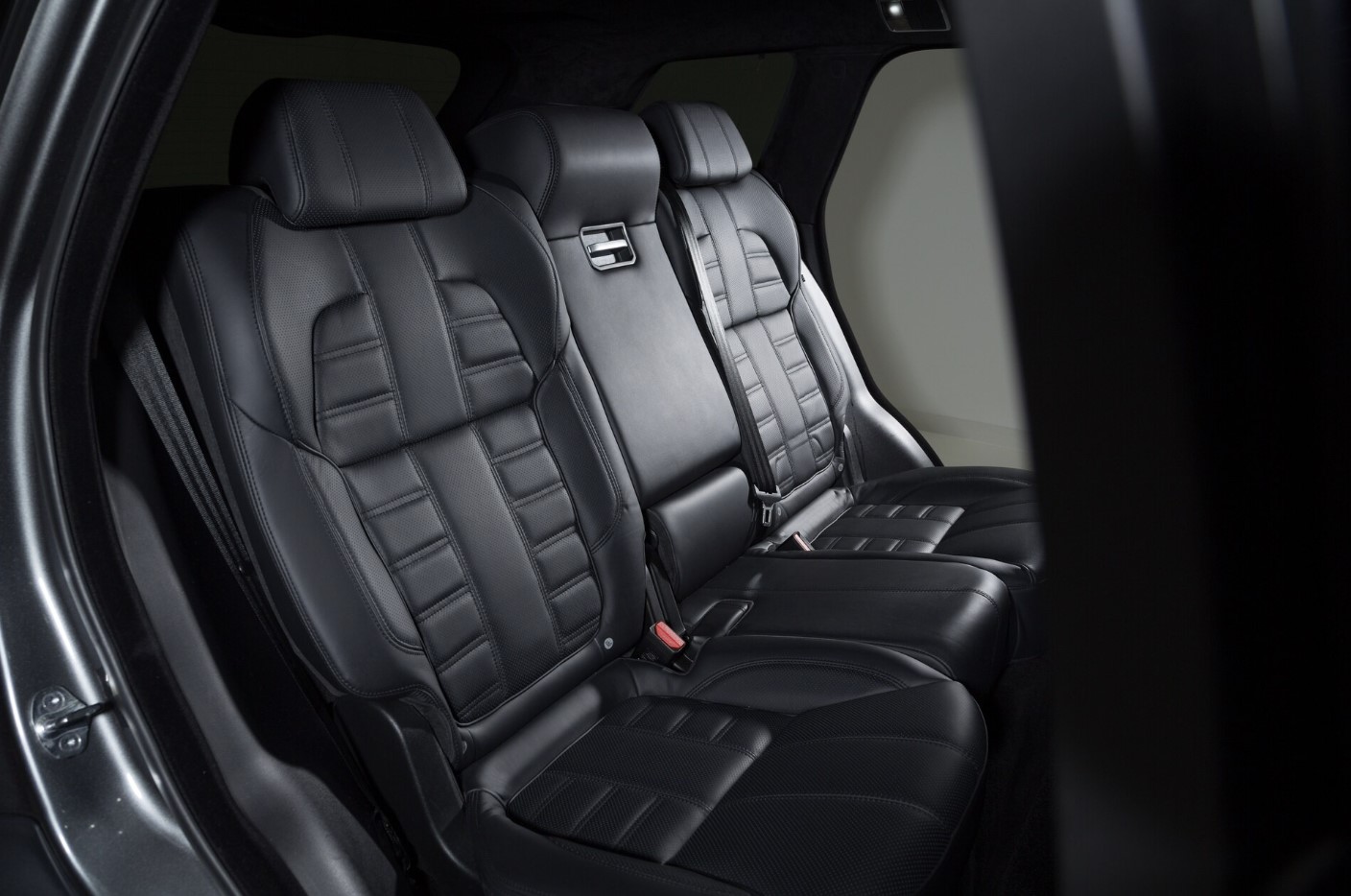
Top eco-friendly car upholstery options from recycled fabrics to plant-based leathers. Learn how automakers are creating sustainable, stylish, and durable interiors while reducing environmental impact.
Consumers and manufacturers alike are seeking eco-friendly upholstery options that reduce environmental impact without sacrificing comfort or style. Traditional car upholstery often relies on leather and synthetic fabrics derived from petroleum, which carry heavy environmental costs. Automakers are exploring sustainable materials for seats, dashboards, and trim aiming to create interiors that remain luxurious and durable while being far kinder to the planet. By embracing recycled fabrics, natural fibers, and leather alternatives, automakers can cut waste and lower emissions. This shift aligns with consumer demand for eco-conscious design and global sustainability goals. Below, we examine three main categories of sustainable upholstery materials and how they’re being used in today’s vehicles, followed by a comparison of their benefits.
Natural Fiber Upholstery Options
Natural and organic fibers are among the most promising eco-friendly upholstery materials. Unlike conventional synthetics (often plastic-based), natural fibers like hemp, organic cotton, bamboo, and wool are renewable and biodegradable. These materials generally require less energy and chemicals to produce. For example, hemp grows quickly with minimal water and no pesticides yet yields a strong fiber suitable for car seat fabrics. Bamboo is another fast-growing resource with great tensile strength, making it useful for seat fabrics and even interior trims.
Automakers have begun incorporating these fibers into production. BMW famously used natural kenaf (a hemp-like plant) fibers in the door panels of its electric i3 model, reducing weight and replacing certain plastics. Volvo offers a wool-blend upholstery (30% natural wool, 70% recycled polyester) that provides a premium feel with a lower environmental impact. Wool is breathable and flame-resistant, and when sourced responsibly it can be a sustainable luxury seating material. These examples show that plant- and animal-based textiles, when processed responsibly, can replace many synthetic components in car interiors.
These textiles can also improve comfort, since wool and cotton breathe well and with proper treatment they meet automotive standards for fire resistance and durability.
Recycled and Upcycled Materials
Another pillar of sustainable car upholstery is the use of recycled and upcycled materials. By reusing waste products like plastic bottles, old textiles, and even ocean plastics, manufacturers can cut down on both landfill waste and the need for new raw materials. Ford has been a leader in this area it uses recycled plastic bottles to create seat fabrics in several vehicle models. Some Ford cars incorporate an average of 200 recycled bottles into their carpeting and seat upholstery, effectively turning trash into comfortable seating.
Many modern cars feature fabrics made from recycled PET polyester (the same plastic used in soda bottles) that look and feel like new. These recycled textiles offer durability comparable to virgin materials while consuming far fewer resources in production. BMW and Volvo have even started using reclaimed ocean plastics for components like floor mats and seat covers, cleaning up marine waste while outfitting cars with high-quality materials. This practice not only tackles pollution but also exemplifies the circular economy in automotive design.
Audi offers Cascade upholstery and Dinamica microfiber in models like the Q5 both fabrics made primarily from recycled polyester, and the all-electric MINI Cooper uses 100% recycled textile for its seat upholstery in a leather-free interior. Recycled nylon yarn (such as Econyl, from discarded fishing nets) is also finding its way into car carpets and headliners, underlining how upcycled materials can perform in demanding automotive applications.
Vegan Leather and Alternative Upholstery
Leather has long been a staple of luxury car interiors, valued for its comfort and durability, but its production raises environmental and ethical concerns. Cattle ranching for leather is responsible for roughly 80% of deforestation in the Amazon, contributing to biodiversity loss and greenhouse gas emissions. To address these issues, automakers are turning to vegan leather alternatives that mimic the look and feel of leather without using animal hides.
Vegan leather options range from high-quality synthetics (polyurethane-based “pleather”) to new bio-based materials derived from plants. Tesla was an early adopter, having phased out real leather in favor of premium synthetic upholstery in all its models. Now many other automakers offer leather-free trims; for instance, Mercedes-Benz uses Dinamica a suede-like microfiber made partly from recycled plastic to achieve a luxurious feel without animal products. Innovative plant-based leathers are emerging as well, such as Piñatex (made from pineapple leaf fibers) and cactus leather, which use agricultural waste to create leather-like fabrics.
Automakers’ commitment to these alternatives is growing. Volvo, for example, has pledged to go completely leather-free in its electric models. Stuart Templar, director of global sustainability at Volvo Cars, emphasizes, "Going leather-free inside our pure electric cars is a good next step towards addressing this issue". Instead of leather, Volvo’s newest interiors use materials like Nordico a textile derived from recycled PET bottles and bio-attributed materials and responsibly sourced wool blend fabrics.
Today’s vegan upholstery materials are engineered to meet strict durability and safety standards. Early synthetic leathers sometimes lacked breathability, but new formulations have largely solved this. The key advantage remains a smaller environmental footprint these alternatives cut out the methane emissions and chemical waste of leather production, and many incorporate recycled or even biodegradable content.

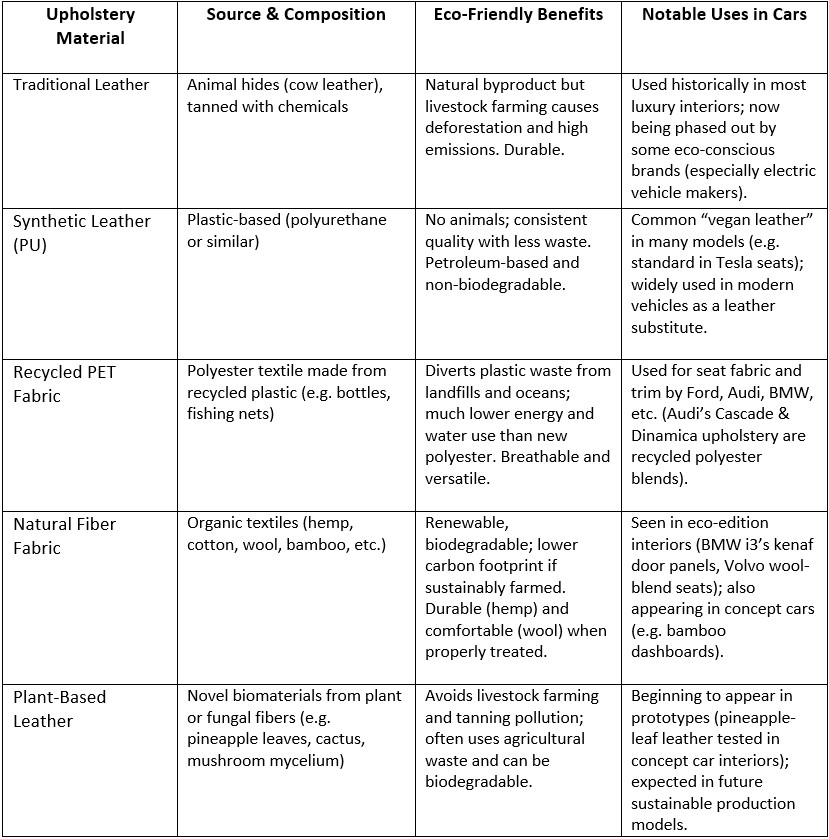
The table below summarizes key differences between traditional and eco-friendly car upholstery options, highlighting their sources and sustainability:
Turning the Wheel Toward a Greener Future
Sustainable car upholstery is fast becoming mainstream, reshaping modern car interiors. By using natural fibers, recycled materials, and innovative vegan leathers, automakers are reducing environmental harm while still delivering comfort and style. These eco-friendly options help cut waste and emissions by giving a second life to materials that would otherwise be discarded. They also meet consumer demand for products that are both high-quality and eco-conscious.
The transition to eco-friendly interiors is accelerating. Major brands now offer models with fully leather-free or recycled-content interiors, proving that green design can meet mainstream expectations. Some challenges remain in scaling these materials and meeting safety standards, but innovation is quickly overcoming these hurdles. In summary, eco-friendly upholstery materials for modern car interiors demonstrate that luxury and sustainability can ride together, benefiting both drivers and the planet.


Also on site :
- RoboParty dévoile le RP1, un robot humanoïde open source full-stack haute performance, lors du salon IROS
- La Smart Payment Association met en garde contre les pressions croissantes exercées par la chaîne d'approvisionnement sur le secteur des cartes de paiement
- U.S. Trade Deficit Widens in August