
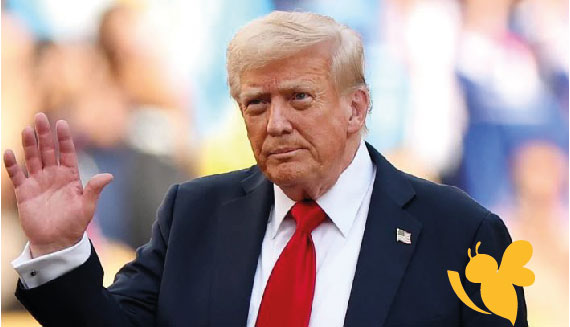
In recent months, the resurgence of Jeffrey Epstein's ties to Donald Trump has sparked significant pushback from within the Republican Party, leading to a complex interplay of political strategy and public perception. Critics have accused Trump of attempting to divert attention from the Epstein controversy by engaging in unrelated issues, such as demanding a reversal of the Washington Commanders' name change and releasing files pertaining to Martin Luther King Jr.'s assassination. This tactic raises questions about Trump's ability to manage his public image amidst growing scrutiny regarding transparency in his administration's dealings with Epstein and associated figures.
New reports Wednesday that Attorney General Pam Bondi told Trump in May that his name appeared in documents related to the case of Epstein, an accused sex trafficker, offered a plausible explanation for the president’s growing fury over the drama.
They will fuel accusations of a cover-up since the administration has refused to release the files.
And although there is no evidence that Trump was involved in any wrongdoing or that he knew of Epstein’s criminal activities when they ran in the same social circle decades ago, there is bound to be intense speculation about the nature of mentions about the president in the investigative files.
Republicans on the panel also voted for additional subpoenas connected to an investigation into Ghislaine Maxwell, a longtime associate of Mr. Epstein who is serving a 20-year prison term for sex trafficking and other crimes.
The Oversight Committee on Wednesday issued a subpoena to Ms. Maxwell for a deposition that is scheduled for Aug. 11 at the federal prison in Florida where she is currently in custody.
The new subpoenas included former President Bill Clinton and Hillary Clinton, the former secretary of state and one of Mr. Trump’s top political rivals; James B. Comey, the former F.B.I. director; Robert S. Mueller III, the special counsel who investigated Russian interference in the 2016 election; and a group of former U.S. attorneys general who served under both Democratic and Republican presidents, including Mr. Trump.
The renewed focus on Trump's relationship with Epstein has created friction within Republican ranks. As several high-profile Republicans join calls for the release of Epstein files, there is an evident tension between party loyalty and accountability. GOP strategist Kevin Madden highlights how this omnipresent issue distracts from Trump's accomplishments while simultaneously jeopardizing his standing among constituents who expect ethical governance. The situation illustrates an internal conflict where some party members are advocating for transparency while others remain aligned with Trump’s narrative.
Moreover, Democratic leaders have seized upon this opportunity to critique Trump’s past associations, framing it as a betrayal of his populist campaign promises regarding corruption. The ongoing discourse surrounding these ties not only complicates Trump's political landscape but also indicates a broader struggle within American politics concerning accountability and moral leadership. As both parties navigate this contentious terrain, it remains clear that issues related to Jeffrey Epstein will continue to haunt Trump's political ambitions.
Read more
Venus Williams, 45, Becomes Oldest Woman Since Navratilova to Win Singles Match German Auto Stocks Rise on Tariff Hopes from U.S.-Japan DealSara H


Also on site :
- After 28 years, KQED radio host Scott Shafer announces retirement
- Raffles Hotels & Resorts Reveals a New Island Sanctuary on Saudi Arabia's Red Sea
- Now Open: Singapore’s Latest Hospitality Concept APT. Makes Its Debut at Stamford Place