
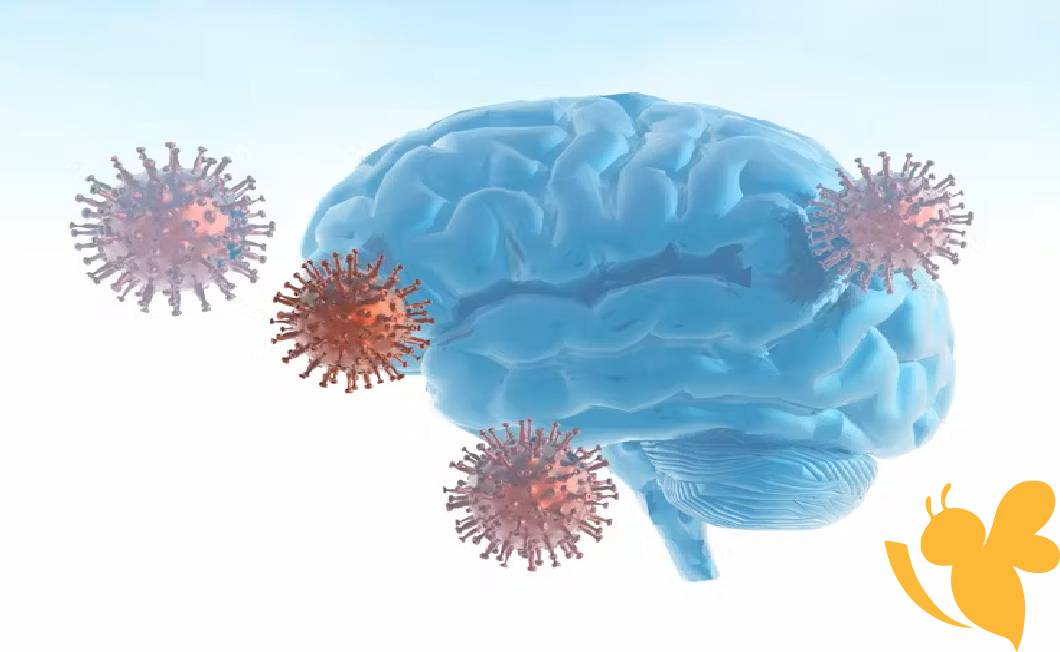
The COVID-19 pandemic has had profound effects on public health, extending beyond physical illness to cognitive decline. A recent study published in *Nature Communications* indicates that the brains of individuals aged faster during the pandemic, with an average increase of 5.5 months in brain age compared to pre-pandemic levels. This accelerated aging was observed not only in those who contracted the virus but also in healthy individuals, suggesting that factors related to the pandemic environment significantly impacted brain health.
Using brain scans from a very large database, British researchers determined that during the pandemic years of 2021 and 2022, people’s brains showed signs of aging, including shrinkage, according to the report published in Nature Communications.
People who got infected with the virus also showed deficits in certain cognitive abilities, such as processing speed and mental flexibility.
The aging effect “was most pronounced in males and those from more socioeconomically deprived backgrounds,” the study’s first author, Ali-Reza Mohammadi-Nejad, a neuroimaging researcher at the University of Nottingham, said by email. “It highlights that brain health is not shaped solely by illness, but also by broader life experiences.”
This accelerated ageing was particularly pronounced among men and those who were more socioeconomically deprived. But Biobank participants are generally healthier, wealthier and less ethnically diverse than the rest of the UK, so the findings may not apply more broadly.
The researchers speculate that these changes may have come about due to loneliness or stress of lockdowns, or lifestyle shifts that may have occurred around that time, such as with exercise levels or alcohol consumption.
The impact of the pandemic seemed to be greater in certain groups—notably men, the elderly, and people with more compromised health, lower educational status and income, or unstable housing. People with less stable employment had an average of five months of additional brain aging compared to those with higher employment status, while poorer health added about four months of increased brain age compared to better health.
Moreover, the study highlights that certain demographics were more adversely affected by these changes. Males and individuals from socioeconomically deprived backgrounds exhibited more pronounced signs of accelerated aging . The implications of these findings extend beyond immediate cognitive concerns; they suggest that long-term public health strategies must address not only direct health outcomes related to infections but also the broader psychosocial impacts resulting from such global events . Understanding these dynamics is crucial for mitigating future health crises and promoting overall well-being.
Read more
U.S. Ends Membership in U.N. Cultural Agency UNESCO Johnson Cuts House Agenda Short, Avoids Epstein Vote
Sara H


Also on site :
- Aaron Sorkin returns to Facebook story with ‘The Social Reckoning’
- 70th London Film Festival rolls out red carpet for buzzy films, stars
- Can GLP-1 drugs help people stop throwing away their money?