
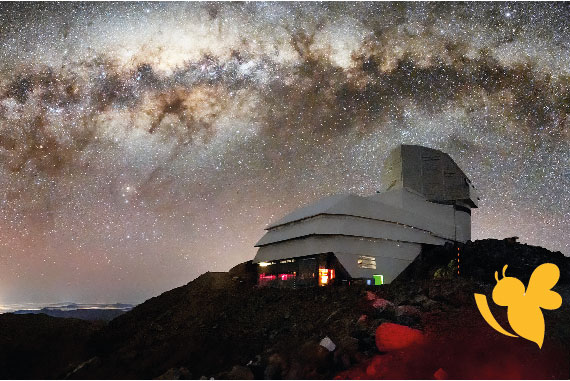
The Vera C. Rubin Observatory, located in the pristine skies of Chile, represents a monumental leap forward in astronomical data collection and analysis. With its impressive 8-meter telescope and the world’s largest digital camera, this observatory is poised to revolutionize our understanding of the cosmos. The Legacy Survey of Space and Time , set to commence in late 2025, will conduct an extensive survey of the Southern Hemisphere's night sky over a decade, capturing images every few nights . This ambitious project aims to provide critical insights into celestial phenomena while also contributing significantly to planetary defense by identifying potentially hazardous asteroids .
In development since the 1990s, the Rubin Observatory is a joint operation between the Stanford Linear Accelerator Center (SLAC) and NSF NOIRLab. Nestled in the mountains of Chile far from any light pollution, it houses the Simonyi Survey Telescope, which has three mirrors, two of which are actually combined together on a single substrate for a width of 8.4 meters.
This is all to get the light of the cosmos to the camera, which has three lenses, the largest being 1.6 meters wide. That makes for the single largest digital camera ever built, about the size of a car and weighing 6,000 pounds. An iPhone Pro has a 48-megapixel camera, Rubin's is 3,200.
Bechtol, an associate professor in the Department of Physics at the University of Wisconsin-Madison, designated what part of the sky to photograph. After some anticipated tinkering, the team anxiously waited for the images to appear.
When the images slowly came into focus, the room of researchers fell quiet.
“We’re basically seeing the light from galaxies before the sun and the Earth formed in our solar system,” he said.
Those initial images, which were released to the public in June, showed in great detail the Virgo Cluster, the closest galaxy cluster to the Milky Way. It also showed the breadth of cosmic history.
One of the most significant aspects of the Rubin Observatory's mission is its broad scope in visible-light astronomy. The observatory will systematically map the entire Southern Hemisphere sky every three nights . Its advanced digital camera—currently recognized as the world's largest—will facilitate this extensive data collection effort, estimated at around 500 petabytes over its operational lifetime . Such a vast repository of information promises to enhance our understanding of various astrophysical phenomena including dark matter and dark energy.
Moreover, the accessibility of this immense dataset through the cloud-based Rubin Science Platform marks a pivotal advancement for astronomers worldwide . Regular updates will be provided via nightly alerts that inform researchers about new discoveries and ongoing celestial events. Ultimately, the Rubin Observatory represents a monumental leap forward in our ability to explore and comprehend the universe's complexities.
Read more
XRP, Bitcoin Jump After Genius Act Passes — Trump Eyes Broader Crypto Push El Salvador releases US deportees in US-Venezuela deal
Sara H


Also on site :
- This Comfy Shoe Brand Has Affordable Holiday Gifts for Everyone on Your List—From Golfers to Fashionistas
- WHO questions Russia: "If plague is ruled out, what did she actually die from?"
- Harry & Meghan’s 2-Word Response Revealed After Report They Want to Apologize to William & Kate