
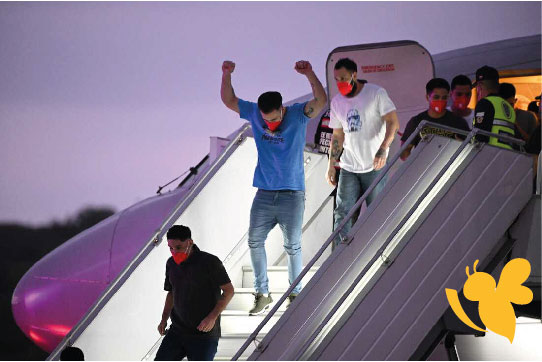
El Salvador President Nayib Bukele stated that the Americans were en route to El Salvador from where they would continue "their journey home," while U.S. Secretary of State Marco Rubio verified the release of "ten Americans who were detained in Venezuela." He thanked Bukele for his help in securing the agreement.
Ten Americans and U.S. permanent residents who had been seized by the Venezuelan authorities and held as bargaining chips were freed in exchange for the release of more than 250 Venezuelan migrants whom the Trump administration sent to a prison in El Salvador.
Secretary of State Marco Rubio stated in a statement that the U.S. citizens and permanent residents has been arrested and jailed in Venezuela “without proper due process” and called for the “restoration of democracy in Venezuela.”
The capture and imprisonment of the Americans has been part of the Venezuelan government’s efforts to gain an upper hand in negotiations with the Trump administration, while the detention of the Venezuelans in El Salvador played a high-profile role in President Trump’s promise to deport millions of immigrants.
The president used the Alien Enemies Act—a wartime authority—to detain and deport numerous migrants to El Salvador. This triggered a legal dispute, with critics alleging that Mr. Trump misused the law’s original purpose to deliver on a campaign pledge.
The Trump administration had accused the men it sent to El Salvador — 252 people in all — of being dangerous criminals and members of a Venezuelan gang, Tren de Aragua, though it has provided little evidence to back this up. Their attorneys claim the men were deported from the United States abruptly and without being given proper legal proceedings.
The U.S. government sent the men to a maximum-security prison in El Salvador , along with around two dozen Salvadorans, including Kilmar Abrego García, a man U.S. officials later admitted has been mistakenly deported.However, critics point out that some of the men has no criminal record whatsoever.
In conclusion, attorneys for several deported Venezuelans have filed complaints, claiming their clients were unfairly singled out due to their clothing or tattoos—features that U.S. immigration authorities allegedly used to wrongly associate them with gang activity.
Read more
El Salvador releases US deportees in US-Venezuela deal XRP, Bitcoin Jump After Genius Act Passes — Trump Eyes Broader Crypto PushMarwa O


Also on site :
- This Comfy Shoe Brand Has Affordable Holiday Gifts for Everyone on Your List—From Golfers to Fashionistas
- Taylor Swift’s ‘Bitter’ Enemy Reportedly Trying to Recruit Blake Lively for ‘Revenge’ Plot Amid Report the ‘Extremely Sensitive’ Singer Is Having a ‘Tough’ Time
- WHO questions Russia: "If plague is ruled out, what did she actually die from?"