
Enab Baladi – Christina al-Shammas
On 9 July, the Syrian Ministry of Transport signed a memorandum of understanding with the Arab Federation for Communications and Internet, aiming to enhance cooperation in the fields of digital transformation and the development of the road freight system through advanced technological solutions.
The signing took place during a workshop organized by the Federation under the auspices of the Ministry of Transport, focusing on the opportunities of benefiting from digital transformation applications and artificial intelligence to improve the organization of freight services in Syria.
Syrian Minister of Transport, Yarub Badr, told Enab Baladi following the agreement’s signing that this workshop is the first in a series of technical support activities that the Federation will conduct to support the ministry’s move toward digital transformation and to benefit from modern digital and AI applications in simplifying passenger and freight transport services across Syrian cities.
Once implemented, the agreement will facilitate annual vehicle registration, obtaining clearance certificates for transport vehicles at transport directorates, reserving seats at driving schools, tracking bus arrival times, and electronic ticket booking for buses and trains, according to the minister.
The head of the Arab Federation for Communications and Internet, Mohammad Firas Bakour, stressed that digital transformation is no longer an option but a strategic necessity, confirming the Federation’s readiness to provide full technical support to establish an integrated smart platform that contributes to organizing and enhancing the efficiency of the transport sector.
Syria’s transport sector is currently witnessing a digital transformation that reflects the government’s direction to improve public services and simplify procedures for citizens.
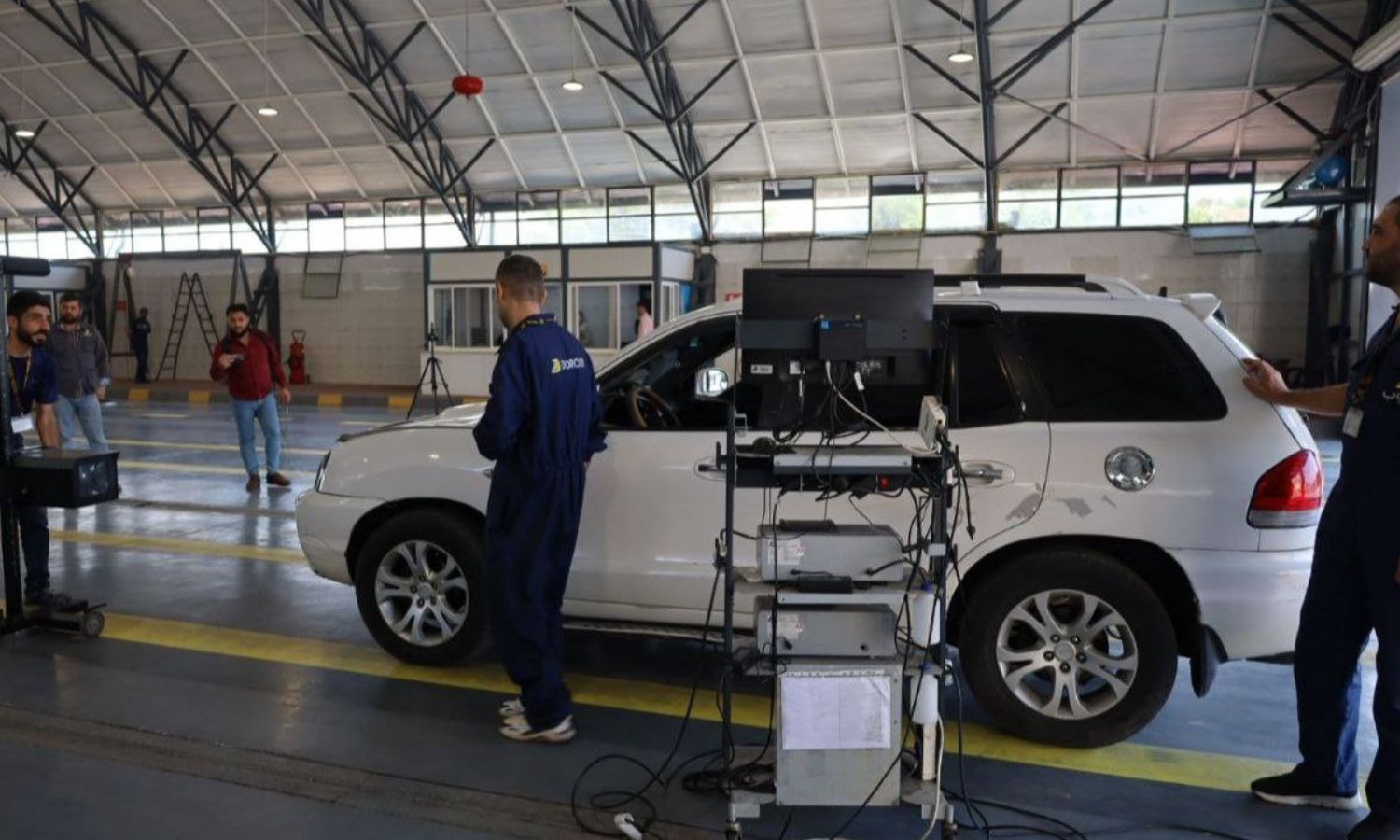
As part of this effort, the Transport Directorate in Latakia Governorate launched electronic services on 16 June, including remote transaction processing, activating technical inspection using the latest equipment, preparing new vehicle plates, and adopting electronic payment.
The directorates were also connected via a unified central network under the Ministry of Transport’s digital transformation plan to simplify procedures for citizens.
Mohammad al-Qurbi, Director of the Latakia Transport Directorate, told Enab Baladi that for the technical inspection process, modern inspection lanes installed in hangars supplied to transport directorates are currently being used and equipped with the most advanced electronic technologies.
Al-Qurbi explained that inspection committee engineers were provided with electronic devices (tablets) linked to the central transaction system used in the directorates, which provides all information and data related to the vehicles, eliminating the need for paper documents. The inspection results are electronically integrated into the transaction process, reducing communication delays that hamper the directorate’s work.
What is the Central Transactions Program?
The program has been in place since 2019 to unify the vehicle database and electronically link all transport directorates across provinces.
The Ministry of Transport stated that data unification will allow vehicle owners to complete transfer and registration procedures at any transport directorate in Syria, regardless of the province in which the vehicle is registered. This reduces travel burdens, expenses, and saves time and money while alleviating the pressure and procedures involved in completing transactions.
Previously, vehicle owners had to process transactions in the province where their vehicle was registered, even if the vehicle was operating elsewhere.
Al-Qurbi noted that the central transactions program currently used by the directorate provides an integrated database of all registered vehicles. As a result, any transaction can be carried out at any directorate, regardless of the registration province, saving the vehicle owner time and effort by allowing the transaction to be completed in their place of residence.
The program also includes all vehicle documents archived electronically, which ensures their preservation and protects them from damage, according to al-Qurbi.
Security and Technical Inspections
Vehicles at transport directorates undergo two types of inspection to ensure safety from both a security and technical standpoint before the vehicle owner can proceed with obtaining a license and new plates.
In the security inspection, the vehicle type, chassis number (a unique number distinguishing each vehicle), and engine number are verified. Some vehicles may include engraved numbers from the Customs Directorate if they entered Syria through it and had issues. These numbers are found on the vehicle frame or floor, or wherever the modification was made.
Engraved numbers may also be added by transport directorates if the vehicle underwent structural cuts or technical modifications, to maintain the car’s safety, according to Yasser Abdullah Abdul Wahab, Head of the Technical Inspection Division at the Damascus Transport Directorate.
Some vehicles may fail to pass this stage, either because they are stolen or because the owner forged the vehicle’s numbers to match those of a previously owned but scrapped vehicle, to avoid paying the high fees of registering a new vehicle, especially during the previous regime. Abdul wahab stated that in such cases, the on-site security authority is notified to take the necessary action based on the situation.
Regarding the second phase—technical inspection—Somer Hatem, the director of the Zablatani Center for Doroob Company, which contracts with the Damascus Transport Directorate, said in a previous statement to Enab Baladi that the process begins with examining engine exhaust gases using a specialized device to measure pollution levels and compare them with international environmental standards. The next stages involve visual inspection, wheel alignment testing, and a complete undercarriage check, including oil and fuel systems.
Hatem confirmed that the inspection is automated using specific equipment within the standards set by the Ministry of Transport and conducted without human interference, preventing tampering by any center staff. If any stage fails, the fault is precisely identified, and the vehicle owner is asked to fix it before returning for a second inspection.
Transport Sector Development
In June, Minister Yarub Badr held a consultative video meeting with a group of Syrian experts residing in Germany to discuss cooperation opportunities in developing the transport sector.
The meeting addressed topics including digital transformation, smart systems, sustainable transport, bridge and railway inspection, and workforce training.
The German experts expressed full readiness to cooperate with the ministry and provide technical and advisory support in the coming phase.
On 3 June, Ali Kaddah, Deputy Secretary-General for Cabinet Affairs, also held a meeting with a delegation from the Ministry of Transport headed by the minister.
The meeting concluded with a government agreement on restructuring and enhancing transparency to regulate the operations of government institutions.
The discussions tackled challenges facing the ministry, the need for internal restructuring, resolving overlaps with other ministries, organizing government vehicles, and allocating fuel quotas.
Minister Badr also presented the ministry’s plans to unify procedures and improve the regulation of transportation systems, emphasizing the urgency of amending traffic law articles, with plans for a comprehensive reform of the vehicle sector in the future.
A preliminary agreement was reached to form a specialized government committee to follow up on implementation within a specific timeframe aimed at enhancing performance and administrative transparency.
Ministry of Transport Moves Toward Digital Transformation to Streamline Its Services Enab Baladi.
Hence then, the article about ministry of transport moves toward digital transformation to streamline its services was published today ( ) and is available on ُEnabbaladi ( Syria ) The editorial team at PressBee has edited and verified it, and it may have been modified, fully republished, or quoted. You can read and follow the updates of this news or article from its original source.
Read More Details
Finally We wish PressBee provided you with enough information of ( Ministry of Transport Moves Toward Digital Transformation to Streamline Its Services )


Also on site :
- iPhone Duo Launches in Santa Barbara
- 1999 Cult-Favorite TV Series Featured Van Halen, Rush, Styx—And Has the ‘Greatest Halloween Episode of All Time’
- Phil Collins Tried to Recreate Ringo Starr’s Drumbeat on This 1983 Genesis Song That Became One of Their Biggest Hits