
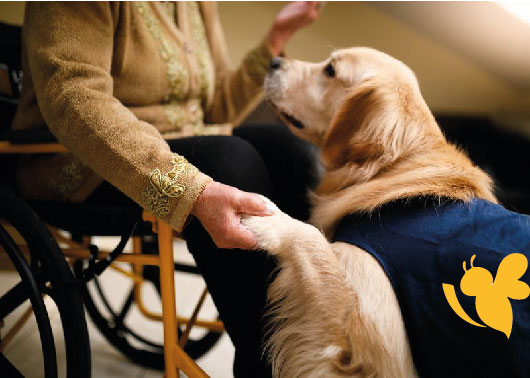
The ability of canines to detect Parkinson's disease (PD) through olfactory cues presents a groundbreaking advancement in early diagnosis. Recent studies indicate that trained dogs can identify the unique scent signatures associated with PD in skin sebum, achieving remarkable accuracy levels of up to 80% sensitivity and 98% specificity . This non-invasive technique not only provides a potential screening tool but also highlights the extraordinary capabilities of dogs' olfactory systems, which have evolved to discern complex scents that are imperceptible to humans.
The study brought together Medical Detection Dogs in Milton Keynes with scientists from the Universities of Bristol and Manchester.
Over several months, the charity’s trainers conditioned two retriever-type dogs to recognize the odor that clings to sebum. This oily substance, which our skin naturally produces, changes when Parkinson’s disease (PD) is present.
Researchers used gas chromatography-mass spectrometry to identify four specific volatile compounds in ear canal secretions that differ significantly between Parkinson’s patients and healthy controls. These biomarkers—ethylbenzene, 4-ethyltoluene, pentanal, and 2-pentadecyl-1,3-dioxolane—form a chemical fingerprint that AI systems can recognize with extraordinary precision.
The team enhanced their diagnostic model by integrating gas chromatography with surface acoustic wave sensors and convolutional neural networks. This combination allows the system to extract features from chromatographic data automatically, achieving 94.4% accuracy in distinguishing Parkinson’s patients from healthy individuals.
The research represents a broader trend toward precision medicine, where diagnostic tools become increasingly sensitive and personalized. As AI systems grow more sophisticated and analytical techniques improve, the boundary between what’s detectable and what’s not continues to shift, opening new possibilities for understanding and treating neurodegenerative diseases.
Moreover, this method has significant implications for clinical practice. Currently, Parkinson's lacks a definitive diagnostic test, which often delays treatment initiation until symptoms become pronounced . Early detection is crucial for effective intervention, as it can mitigate the progression of the disease and enhance patients' quality of life . By leveraging canine senses in diagnostic protocols, healthcare professionals may offer timely interventions that could alter the trajectory of Parkinson's disease management.
Read more
U.S. Funding for California's High-Speed Rail Project Cut by $4 Billion Under Trump Epstein Fallout: Trump’s New Strategy—Accuse the DemocratsSara H


Also on site :
- This Comfy Shoe Brand Has Affordable Holiday Gifts for Everyone on Your List—From Golfers to Fashionistas
- WHO questions Russia: "If plague is ruled out, what did she actually die from?"
- Taylor Swift Ex Reportedly Tried to ‘Resolve Lingering Issues’ with Her Right Before Travis Kelce Wedding as the NFL Player Pushed Back on the ‘Painful’ Request