
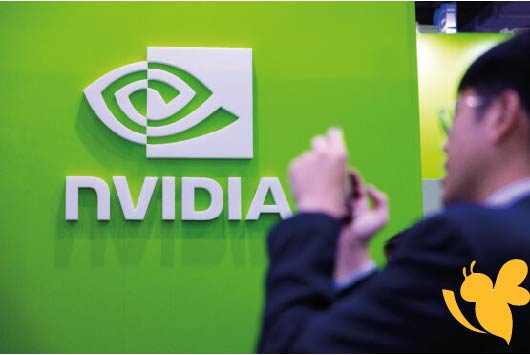
Nvidia's recent announcement to resume sales of its H20 AI chips to China represents a pivotal moment in the ongoing dialogue between technology firms and government regulations. After previously halting sales due to U.S. export controls, Nvidia has received assurances from the U.S. government that necessary licenses will be granted for these transactions . This decision is significant not only for Nvidia's operational strategy but also for its competitive positioning within the rapidly evolving AI market.
Nvidia said Tuesday that it hopes to resume sales of its H20 general processing units to China, in a major win for the company that has suffered from U.S. export curbs.
The U.S. government in April told Nvidia it would require a license to sell the chips to China, the company said in a filing, effectively halting their sales. The H20 chips had been designed specifically to bypass earlier export controls on Beijing.
After President Trump moved forward with the H20-related export controls in April, Nvidia designed a new, China-focused product—the RTX PRO. The company described it as “fully compliant,” meaning it falls below the technical thresholds outlined by U.S. regulators. It uses conventional GDDR7 memory instead of HBM and avoids advanced CoWoS packaging, resulting in a much cheaper product—roughly half the price of the H20. Generally speaking, this latest chip is a significantly downgraded version of the H20, which itself is already inferior to the H100, Nvidia’s legacy AI chip from three years ago.
Although the license approval for the H20 may arrive soon, two major concerns remain. First, there may be a potential quota on the H20 chip exports. Since the license requirement remains indefinite, this suggests tighter oversight on where the chips are going. U.S. officials are expected to scrutinize shipments to ensure that H20 chips do not end up in military applications. While Jensen Huang has stated that policymakers should not worry about the Chinese military using Nvidia chips—arguing that China can’t depend on products the U.S. can cut off at any moment—the H20 still holds strategic value. It could be used both to limit China's AI development and as a bargaining chip in negotiations.
In the blog, Nvidia said Huang met with President Donald Trump and U.S. policymakers this month and reaffirmed the company’s “support for the Administration’s effort to create jobs, strengthen domestic AI infrastructure and onshore manufacturing, and ensure that America leads in AI worldwide.”
Huang also discussed with the Chinese government and industrial officials this month regarding how AI will raise productivity and expand opportunity.
In an interview with CNN, Huang told Sunday that the U.S. needs to search for AI developers worldwide to make the American tech stack the global standard, adding that “China is incredible in AI because 50% of the world's AI developers are in China and Chinese.”
Nvidia last week became the first company to surpass a $4 trillion market value, driven by surging demand for AI chips, despite export restrictions weighing on the semiconductor industry.
Read more
Bournemouth vs Hibernian - team news, lineups and prediction Cal Raleigh makes Home Run Derby historySara H


Also on site :
- Costco is now selling Australia’s most iconic snack in the US — and shoppers are stockpiling
- Missouri Woman Pleads Guilty After Allegedly Trading Her Foster Child for a Monkey
- Tom Hanks shocks reporter with brutal joke about MS NOW ratings during live interview