
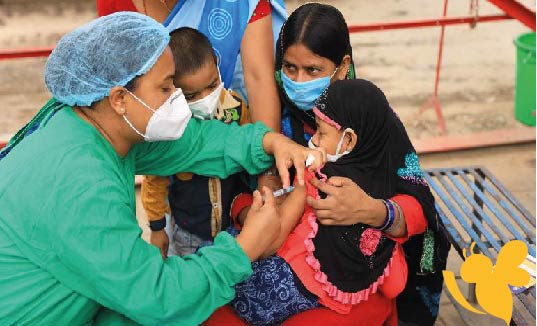
Global childhood vaccination efforts have shown signs of improvement over recent decades, yet significant challenges remain. Since 1980, vaccination coverage has increased worldwide, saving an estimated 154 million lives, predominantly among children under five . However, a recent study indicates that progress has plateaued in the last twenty years due to various factors, including the COVID-19 pandemic's exacerbation of existing immunization challenges . This stagnation poses a serious risk to achieving the World Health Organization’s ambitious global immunization goals set for 2030.
In their annual estimate of global vaccine coverage, released Tuesday, the World Health Organization and UNICEF said about 89% of children under 1 year old got a first dose of the diphtheria, tetanus and whooping cough vaccine in 2024, the same as in 2023. About 85% completed the three-dose series, up from 84% in 2023.
Officials acknowledged, however, that the collapse of international aid this year will make it more difficult to reduce the number of unprotected children. In January, U.S. President Trump withdrew the country from the WHO, froze nearly all humanitarian aid and later moved to close the U.S. AID Agency. And last month, Health Secretary Robert F. Kennedy Jr. said it was pulling the billions of dollars the U.S. had previously pledged to the vaccines alliance Gavi, saying the group had “ignored the science.”
Across 53 countries in Europe and central Asia, vaccination coverage dropped by an average of one percentage point on 2019 levels. In 2024, more than half of the countries in the region did not meet the 95% vaccination rate required to reach herd immunity for measles. Almost a third reported coverage below 90%.
Montenegro had the lowest coverage with just 23% children having their first MMR jab, while seven countries worldwide had rates below 50%.
The UK is the worst performer among G7 nations, the data shows. Only 89% of children received their first MMR jab in 2024, compared with 96% in Germany, 95% in France, Italy and Japan, and 92% in the US and Canada.
Reported measles cases worldwide continue to rise. WHO/Unicef estimates there were about 10m cases and more than 100,000 deaths from measles in 2023. The number of countries reporting large and disruptive outbreaks nearly doubled from 33 in 2022 to 60 in 2024. Cases in Europe doubled during 2024 and in the US they reached a three-year high.
The percentage of girls receiving a first dose increased to 31% in 2024, from 27% in 2023 and 20% in 2022. The percentage receiving all the doses of vaccine recommended in their country increased to 28% in 2024, from 21% in 2023 and 14% in 2022, according to the new report.
HPV vaccine coverage was somewhat stable among boys, with 8% receiving a first dose in 2024 and 2023.
While routine childhood immunizations continue to yield substantial health and economic benefits—preventing millions of illnesses and hospitalizations —the current decline in vaccination rates underscores an urgent need for renewed efforts. To avoid reversing decades of progress and protect future generations from preventable diseases, stakeholders must collaborate on comprehensive educational campaigns and equitable access initiatives.
Read more
Fire at Fall River Assisted Living Facility Claims Nine Lives, Injures Over 30 Wildfire Destroys Historic Grand Canyon Lodge — Second Time the Landmark Has BurnedSara H


Also on site :
- This Comfy Shoe Brand Has Affordable Holiday Gifts for Everyone on Your List—From Golfers to Fashionistas
- WHO questions Russia: "If plague is ruled out, what did she actually die from?"
- Taylor Swift Ex Reportedly Tried to ‘Resolve Lingering Issues’ with Her Right Before Travis Kelce Wedding as the NFL Player Pushed Back on the ‘Painful’ Request