
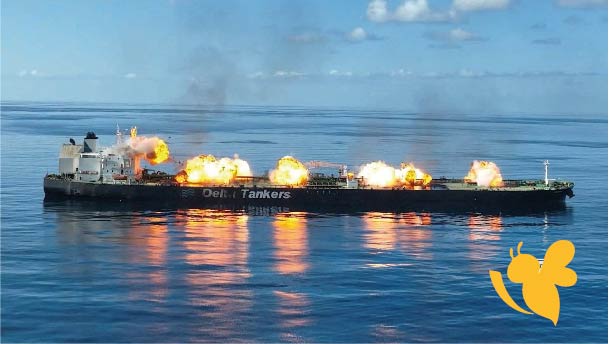
Yemen's recent military actions in the Red Sea, particularly those executed by Houthi forces, indicate a significant shift in regional military power dynamics. Since October 2023, the Houthis have targeted both commercial and military vessels in the Red Sea, raising alarms about the potential repercussions for global trade and maritime security . These assaults not only challenge international shipping routes but also signal an increased assertiveness of non-state actors like the Houthis in regional geopolitics. This development could destabilize existing alliances and provoke responses from global powers.
Despite US forces dropping over 2,000 munitions on nearly 1,000 targets in Yemen, Yemeni support for Gaza continues. Commercial ships remain vulnerable due to limited defensive infrastructure and lightly armed security teams, which are ineffective against drones or precision-guided missiles. Yemeni forces, experienced in drone and helicopter warfare, can easily bypass the small security teams aboard these vessels. The report also noted that Yemen, previously considered the weakest link in the Resistance Axis, has become more prominent due to its capacity for precise and impactful strikes, disrupting US strategies and establishing the Red Sea as a crucial front against Western hegemony.
Since October 2023, Yemen has become a key player in regional resistance following the escalation of Israeli aggression on Gaza. Yemeni Armed Forces' naval operations, targeting ships linked to other interests, have established a de facto maritime blockade in the Red Sea, Gulf of Aden, and Arabian Sea, aiming to pressure Israel to end its military campaign and lift the siege on Gaza.This strategy reflects Yemen's alignment with the "axis of resistance," showcasing its commitment to the Palestinian cause. These actions have not only disrupted global shipping routes, leading to increased insurance premiums and rerouting of vessels around the Cape of Good Hope, but have also drawn international attention to the humanitarian crisis in Gaza. The Houthis, who control much of Yemen, have framed their Red Sea operations as a legitimate response to Israeli actions and a demonstration of solidarity with Palestinians. While these operations have garnered support among some segments of the Arab and Muslim world, they have also been widely condemned by Western powers and others who view them as a threat to maritime security and global trade. The situation remains volatile, with ongoing diplomatic efforts aimed at de-escalation and finding a solution that addresses both the security concerns in the Red Sea and the humanitarian needs in Gaza.The frequency of Houthi attacks has risen sharply, with over fifty incidents reported since mid-November 2023 . These include high-profile hijackings such as that of the M/V Galaxy Leader, which prompted a strong condemnation from the UN Security Council via Resolution 2722 . Despite military responses from the U.S. and its allies aimed at deterring further aggression, there remains skepticism regarding the effectiveness of such measures in ensuring long-term stability or curbing Houthi influence.
Read more
Handala’ Vessel Prepares to Sail from Italy Aiming to Challenge Gaza Blockade West Nile virus detected in Allegheny County mosquitoes
Sara H


Also on site :
- This Comfy Shoe Brand Has Affordable Holiday Gifts for Everyone on Your List—From Golfers to Fashionistas
- WHO questions Russia: "If plague is ruled out, what did she actually die from?"
- Harry & Meghan’s 2-Word Response Revealed After Report They Want to Apologize to William & Kate