
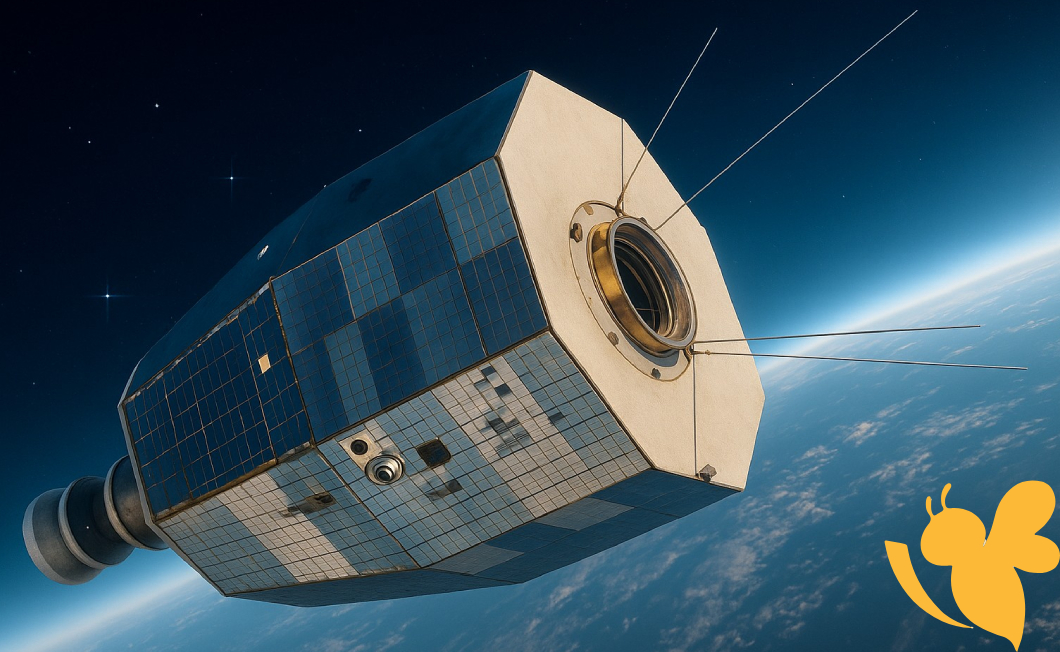
The detection of a small but powerful radio signal from the long-dead NASA Relay 2 satellite has sparked considerable intrigue within the scientific community. Launched in 1964 and inactive since 1967, Relay 2 unexpectedly emitted a burst of radio waves that outshone other celestial signals . This phenomenon was recorded by the Australian Square Kilometre Array Pathfinder (ASKAP) on June 13, 2024, lasting less than 30 nanoseconds. The nature of this signal challenges existing paradigms regarding dormant satellites and raises questions about potential sources of interference in astrophysical observations.
On June 13, 2024, a team was working at the Australian Square Kilometer Array Pathfinder heard something unexpected—a potential FRB that lasted less than 30 nanoseconds. The pulse, they note, was so strong that it eclipsed all of the other signals coming from the sky.
It was originally assumed that the signal had come from some distant object because that is the case for most FRBs. But subsequent analysis showed that it had come from a nearby source.


Also on site :
- This Comfy Shoe Brand Has Affordable Holiday Gifts for Everyone on Your List—From Golfers to Fashionistas
- Taylor Swift’s ‘Bitter’ Enemy Reportedly Trying to Recruit Blake Lively for ‘Revenge’ Plot Amid Report the ‘Extremely Sensitive’ Singer Is Having a ‘Tough’ Time
- Camilla Suffers Heartbreaking Losses After Report Charles Is in ‘Agony’ Following a Devastating Health Update