
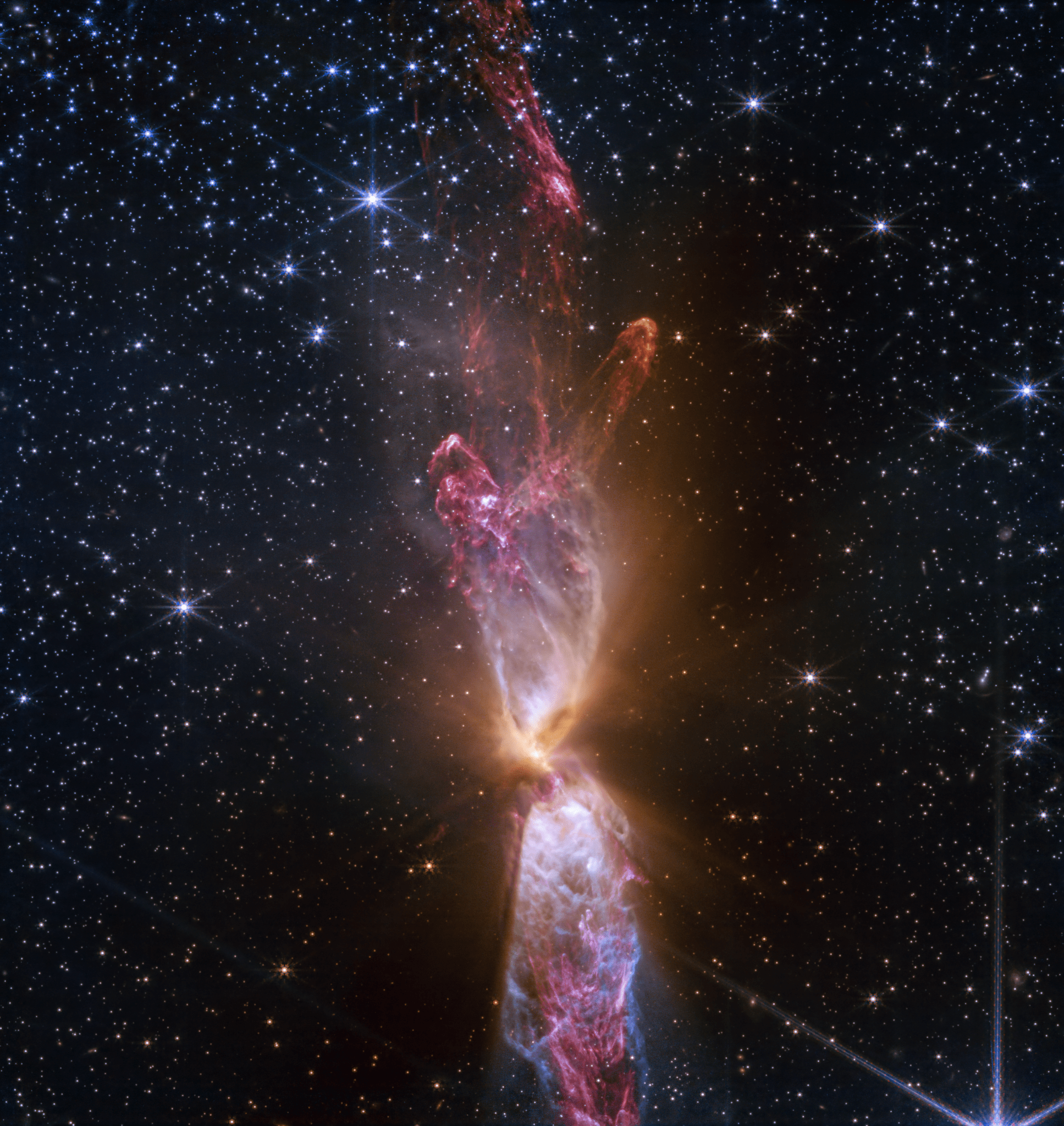
Two actively forming stars are responsible for the shimmering hourglass-shaped ejections of gas and dust that gleam in orange, blue, and purple in this representative color image captured by NASA’s James Webb Space Telescope. This star system, called Lynds 483, is named for American astronomer Beverly T. Lynds, who published extensive catalogs of “dark” and “bright” nebulae in the early 1960s.
The two protostars are at the center of the hourglass shape, in an opaque horizontal disk of cold gas and dust that fits within a single pixel. Much farther out, above and below the flattened disk where dust is thinner, the bright light from the stars shines through the gas and dust, forming large semi-transparent orange cones.
Learn what the incredibly fine details in this image reveal.
Image credit: NASA, ESA, CSA, STScI
Hence then, the article about like sands through the hourglass was published today ( ) and is available on NASA ( Middle East ) The editorial team at PressBee has edited and verified it, and it may have been modified, fully republished, or quoted. You can read and follow the updates of this news or article from its original source.
Read More Details
Finally We wish PressBee provided you with enough information of ( Like Sands Through the Hourglass… )


Also on site :
- Lanterns Fake-Out: After A Major Death, John And Hal Realize The Manhunter Is [Spoiler]! Read Episode 4 Recap
- This Airline Just Upgraded Premium Economy With Full Privacy Screens, Electric Recline, and Wireless Charging
- Meet the New Miss America for 2027